
Many businesses struggle to answer a basic question: what is our current cash position? Financial data is often scattered across spreadsheets, bank portals, and accounting software that don’t sync with each other, leaving decision-makers with numbers that are days or weeks out of date. This gap between what is actually happening in a business and what leaders can see creates real risk, and in 2026, with faster transactions and tighter margins, it is a risk fewer businesses can afford. As a result, financial visibility has become a core requirement for running a healthy, well-managed business. This article explains why it matters and how businesses can achieve it.
Table of Contents
What Is Financial Visibility?
Financial visibility means having a clear, accurate, and up-to-date picture of your company’s money at all times. This includes your income, expenses, cash flow, outstanding invoices, and overall financial health. Financial visibility lets you monitor your business in real time, giving you access to up-to-date financial information whenever you need it, while your accountant continues to manage and verify the records.
It sounds simple, but many businesses still struggle with it. Data is often scattered across spreadsheets, bank portals, invoicing tools, and accounting software that don’t talk to each other. By the time all that information gets pulled together, it’s already outdated.
Why 2026 Is a Turning Point
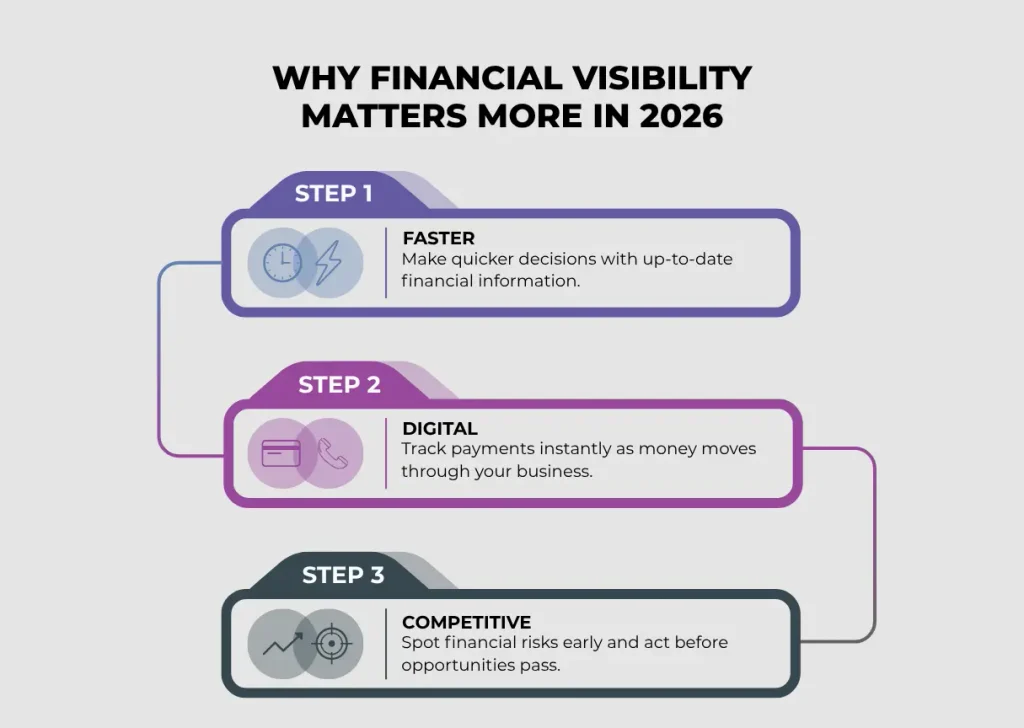
A few things have changed that make financial visibility more important than ever this year.
1. Business moves faster. Markets shift quickly, supply costs change overnight, and customer payment habits are less predictable. Waiting weeks for financial reports means you’re always reacting instead of planning ahead.
2. Digital payments are everywhere. With so many transactions happening through cards, wallets, and online transfers, businesses need systems that can track money the moment it moves. This is where payment integration financial visibility comes in. When your payment systems are connected directly to your financial dashboards, every transaction updates your records instantly, with no manual entry and no delays.
3. Competition is tighter. Businesses that can see problems coming, like a cash flow gap or a slow-paying client, can act early. Those relying on outdated numbers often find out too late.
The Power of Real Time Financial Visibility
Real time financial visibility is exactly what it sounds like: seeing your financial data as it happens, not days or weeks later. Instead of asking “what happened last month,” you can ask “what’s happening right now.”
This matters for a few practical reasons:
- Faster decisions. If you can see your cash position today, you can decide today whether to invest in stock, pay a supplier early, or hold off on spending.
- Fewer surprises. Real time visibility helps you catch unusual spending, missed payments, or billing errors before they turn into bigger problems.
- Better forecasting. When your data is current, your predictions about future cash flow are far more reliable.
- Stronger trust with stakeholders. Investors, lenders, and partners feel more confident working with businesses that clearly understand their own numbers.
Modern accounting platforms, cloud banking tools, and payment integration financial visibility solutions have made this level of insight achievable for businesses of almost any size, not just large corporations with big finance teams.
Also Read: Why Digital Accounting Is the Future of Business Success
Financial Visibility in the UAE Business Landscape
The UAE has become one of the world’s most dynamic business hubs, and that growth brings both opportunity and pressure. With new tax regulations, VAT compliance requirements, and a fast-growing digital economy, financial visibility UAE businesses need today looks very different from even a few years ago.
Companies operating in the UAE are increasingly expected to keep accurate, audit-ready records while also making quick decisions in a competitive market. Local businesses that adopt real time visibility tools are better positioned to manage compliance, plan for growth, and avoid the cash flow surprises that can catch even well-established companies off guard.
How to Improve Your Financial Visibility
If your business is still relying on outdated spreadsheets or disconnected tools, here are a few practical steps to consider:
- Connect your payment systems to your accounting software so transactions update automatically.
- Use a single dashboard that pulls together cash flow, invoices, and expenses in real time.
- Set up alerts for low balances, overdue invoices, or unusual spending.
- Review your numbers weekly, not just monthly, so small issues don’t turn into big ones.
- Choose tools built for growth, so your systems can scale as your business does.
Final Thoughts
Financial visibility isn’t a luxury reserved for large enterprises anymore. It’s a necessity for every business that wants to make smart, timely decisions in a fast-moving world.
Whether you’re a small business owner trying to stay on top of cash flow, or a growing company navigating the UAE’s evolving business environment, having clear and current financial data puts you in control instead of leaving you guessing.
In 2026, the businesses that thrive will be the ones that can see clearly, not the ones still working in the dark. The good news? Getting there is easier than ever, and the sooner you start, the sooner you’ll feel that difference for yourself.
Frequently Ask Questions
How does payment integration improve financial visibility?
When payment systems are directly connected to your accounting or financial dashboard, transactions are recorded automatically and instantly. This removes manual data entry, reduces errors, and ensures your financial picture is always current.
Do small businesses really need real time financial visibility, or is it just for big companies?
Small businesses often benefit the most. Without a dedicated finance team, real time visibility helps owners catch cash flow issues early, avoid missed payments, and make confident decisions without waiting for outside help.

0 Comments