
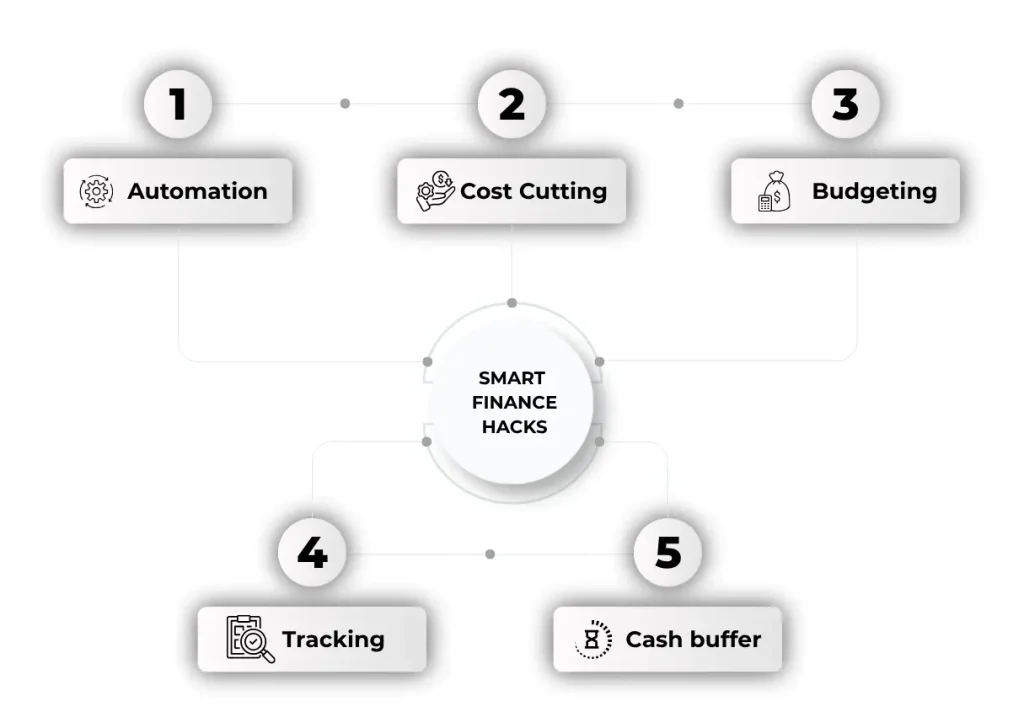
As an entrepreneur, your time is your most valuable asset. Managing your finances can feel time-consuming, but it doesn’t have to be. A handful of smart finance hacks can help you stay financially organized in minutes a week, not hours. Here are five simple, practical ways to take control of your business finances starting today.
Table of Contents
1. Automate Your Savings and Bill Payments
One of the simplest finance hacks for business owners is automation. Manually tracking due dates and transferring money into savings takes time and mental energy — two things entrepreneurs never have enough of.
Set up automatic transfers to move a fixed percentage of your income into a savings or emergency fund every month. Similarly, automate recurring bills like rent, utilities, software subscriptions, and loan payments. This reduces the risk of late fees, missed payments, and the stress of remembering multiple deadlines.
Most banking apps and accounting tools such as CapiPlan, Xero now offer built-in automation features. Once it’s set up, you barely have to think about it, and your business finances stay consistent even during your busiest weeks.
2. Audit Your Subscriptions and Cut Hidden Costs Quarterly
Small, recurring charges are easy to lose track of, and they quietly eat into profits. Software tools, memberships, and subscriptions that seemed useful six months ago often keep charging your account long after they’ve stopped adding value.
Set a recurring reminder once every three months to go through your bank and credit card statements line by line. List every subscription, note what it’s for, and ask a simple question: are we actually using this? Cancel or downgrade anything that isn’t pulling its weight.
This is one of the quickest finance hacks for small business owners because it takes less than an hour but can free up hundreds of dollars a month. Many entrepreneurs are surprised to find tools they forgot they even signed up for, still being billed every single month.
3. Use a Simple Budgeting System — The 50/30/20 Rule
Entrepreneurs often assume budgeting requires complicated formulas or expensive software. In reality, a simple framework can work wonders. The 50/30/20 rule is one of the most popular finance hacks for small business owners because it’s easy to remember and apply.
Here’s how it works:
- 50% of income goes toward essential business expenses (rent, salaries, utilities, inventory)
- 30% of income goes toward growth activities (marketing, new tools, hiring, expansion)
- 20% of income goes toward savings, debt repayment, or an emergency fund
You can adjust the percentages based on your business type and current goals, but this structure gives you a quick, stress-free way to see where your money is going each month without needing a finance degree.
4. Track Expenses in Real Time, Not at Month-End
Waiting until the end of the month to review expenses is a common mistake. By then, it’s often too late to fix overspending or catch billing errors. Instead, make expense tracking a daily or weekly habit using accounting apps that sync directly with your bank account.
Tools that categorize spending automatically save hours of manual work and give you a real-time view of your cash flow. This habit is one of the most effective finance hacks because it helps you catch problems early like a forgotten subscription still being charged, or a vendor overcharging you.
Real-time tracking also makes it easier to make quick, informed decisions, such as pausing non-essential spending during a slow month or reinvesting extra profit during a strong one.
5. Build a Cash Flow Buffer Before You Need It
Cash flow problems are one of the biggest reasons small businesses struggle, even when they’re profitable on paper. Late client payments, seasonal slowdowns, or unexpected expenses can create serious short-term stress.
A smart solution is to build a cash flow buffer, essentially a small reserve fund that covers one to three months of operating expenses. Start small if needed; even setting aside a modest amount every month adds up over time.
This buffer acts as a safety net, giving you room to breathe during slow periods without relying on high-interest credit cards or emergency loans. Among all finance hacks for business owners, this one offers peace of mind that’s hard to put a price on.
Suggested: 9 Financial Habits of Successful Entrepreneurs
Final Thoughts
Managing money doesn’t have to be complicated or time-consuming, even for the busiest entrepreneurs. By automating routine tasks, separating personal and business finances, following a simple budgeting rule, tracking expenses consistently, and building a cash flow buffer, you can take control of your business finances without adding more to your plate.
These small, consistent habits compound over time, giving you not just a healthier bank balance, but also the clarity and confidence to make better business decisions. Start with just one hack this week, and build from there; your future self (and your business) will thank you.
Frequently Ask Questions
Are personal finance hacks different from business finance hacks?
They overlap quite a bit. Habits like budgeting, automating savings, and tracking expenses work well for both. The main difference is that business finances also involve cash flow, vendor payments, and taxes, which need a bit more structure than personal money management.
How much should I save in my cash flow buffer?
A good starting point is one to three months of essential operating expenses. If that feels like too much right now, start with even a small monthly amount and build it up gradually.

0 Comments