
A company can show good profitability, yet it may have difficulties with paying its debts. This is not as unusual as it appears. Most of the businesses seem to be financially stable on paper but experience cash crunches in the real world. This gap underscores the need to comprehend profit vs cash flow.
Profit shows how well a business is performing, while cash flow shows its ability to manage day-to-day expenses. Misunderstanding the difference can lead to poor financial planning, cash shortages, and operational problems.
Businesses need to have a clear understanding of profit vs cash flow that how these two financial metrics differ and interact in order to make informed decisions.
Table of Contents
What Is Profit?
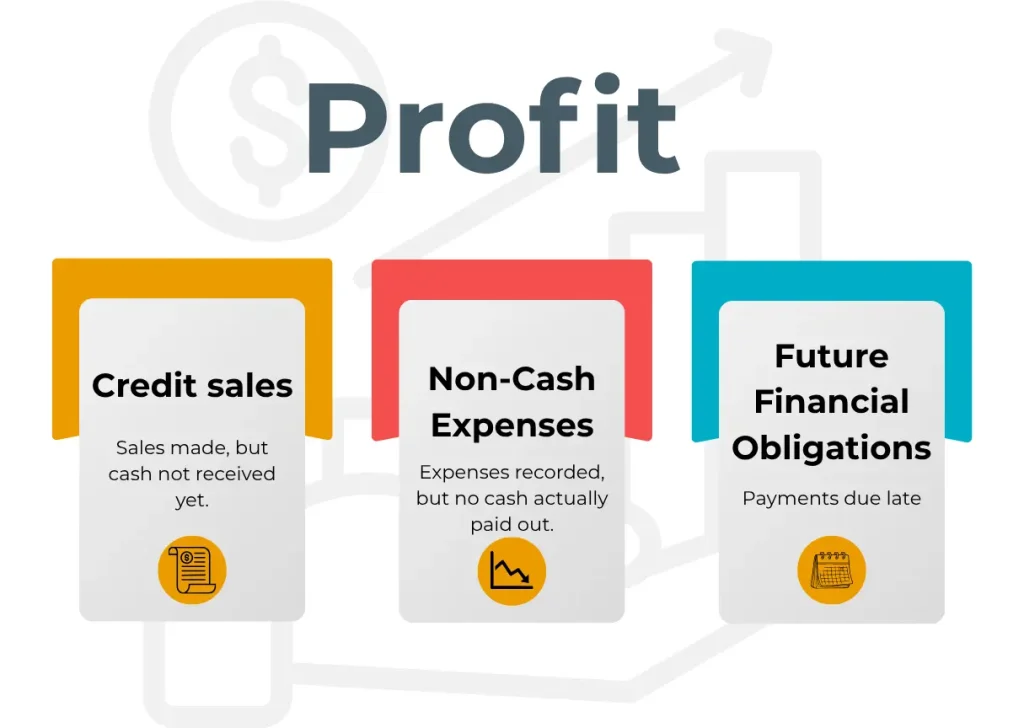
Profit is the amount left after a business subtracts all its expenses from its revenue. It is a key indicator of financial performance and is commonly used to evaluate success over a specific period.
There are different levels of profit, including gross profit, operating profit, and net profit, which represents the final earnings after all costs, taxes, and interest are deducted. Profit is calculated using accrual accounting. This means revenue and expenses are recorded when they are earned or incurred, not when cash is actually received or paid.
Because of this, profit may include:
- Credit sales (money not yet received)
- Non-cash expenses like depreciation
- Future financial obligations
This is why profit is a strong measure of performance but not always a reliable indicator of available cash.
What Is Cash Flow?

Cash flow refers to the movement of money in and out of a business during a specific period. It reflects how much cash is available to meet immediate financial obligations. Cash flow is typically divided into:
- Operating activities
- Investing activities
- Financing activities
Unlike profit, cash flow only considers real transactions. It shows how much money is actually available, making it a direct measure of liquidity.
A business with positive cash flow has more money coming in than going out, while negative cash flow indicates potential financial stress.
Accounting Profit vs Cash Flow
The difference between accounting profit vs cash flow lies in timing and measurement. Accounting profit is based on accrual accounting. It records income and expenses regardless of when cash is received or paid. This provides a broader view of financial performance.
Cash flow, on the other hand, focuses strictly on actual cash movement. It answers a simple question: how much money is available right now? For example, a business may record a sale today but receive payment after 30 days. In this case:
- Profit increases immediately
- Cash flow remains unchanged until payment is received
This distinction is critical because it explains why profitable businesses can still face liquidity issues.
Profit vs Cash Flow: Key Differences
Understanding profit vs cash flow is essential for managing a business effectively and avoiding financial problems.
| Basis | Profit | Cash Flow |
| Meaning | Money left after all expenses are deducted | Movement of cash in and out of the business |
| Focus | Shows business earnings | Shows available cash position |
| Accounting Method | Based on accrual accounting | Based on actual cash transactions |
| Timing | Recorded when income is earned and expenses occur | Recorded when cash is received or paid |
| Includes Non-cash Items | Yes (e.g., depreciation) | No, only real cash |
| Purpose | Measures overall profitability | Measures liquidity and ability to pay bills |
| Example | Sales recorded even if payment not received | Cash recorded only when payment is received |
Why Cash Flow Often Matters More
According to financial insights widely discussed in sources like Investopedia, a business can be profitable but still fail due to poor cash flow management. Cash flow is critical because it ensures that a business can:
- Pay salaries and suppliers
- Cover operational expenses
- Avoid debt or financial distress
Cash is often described as the “lifeblood” of a business because without it, operations cannot continue even if profits look strong. This highlights the importance of understanding profit vs cash flow, as many experts believe cash flow matters more in the short term for smooth operations.
How Fast Growth Can Build Profit and Eat Cash
Fast growth can look great on paper because sales increase and profits start to rise. But at the same time, the business often needs more money to keep up with demand. It may need to buy more stock, hire staff, or invest in operations before actually receiving cash from customers.
Many growing businesses sell on credit, which means revenue is recorded, but cash comes later. While waiting for payments, the company still has to pay suppliers, rent, and salaries. This gap between earning and receiving cash can create pressure.
As a result, a business can show good profit but still struggle to pay its bills. If cash is not managed properly, fast growth can lead to cash shortages and slow down operations instead of supporting them.
Also Read: Top 7 Accounting Trends in 2026 That Will Boost Profits
Common Business Risks
Misunderstanding profit vs cash flow can lead to serious financial issues:
1. Overestimating Financial Strength: Businesses may assume they are doing well based on profit, ignoring cash shortages.
2. Poor Liquidity Management: Delayed payments or high expenses can create cash flow gaps.
3. Unsustainable Growth: Rapid expansion without proper cash flow planning can strain finances.
4. Operational Disruptions: Insufficient cash flow can delay payments to suppliers, employees, and service providers. This can disrupt daily operations, weaken supplier trust, and even lead to production or service delays.
These risks highlight why relying on profit alone is not enough.
Best Practices for Managing Both
To maintain financial stability, businesses should focus on both profit and cash flow, as understanding profit vs cash flow helps them make better financial decisions.
- Monitor cash flow regularly to avoid shortages
- Track profit to evaluate long-term performance
- Align revenue collection with payment obligations
- Use forecasting to plan ahead
- Maintain a balance between growth and liquidity
This balanced approach supports both survival and expansion.
Wrap Up!
The discussion around profit vs cash flow is not about choosing one over the other. It is about understanding their roles in business success. Profit measures how well a business performs over time, while cash flow determines whether it can sustain operations in the present. A company can be profitable but still face financial distress if it lacks cash.
In practical terms, cash flow ensures survival, while profit drives growth. The most successful businesses recognize this balance. They focus on generating profit while maintaining strong cash flow to support daily operations.
Ultimately, profit builds the future, but cash flow protects the present, and both are essential for long-term success.
Frequently Ask Questions
Is profit better than cash flow?
Cash flow is usually more important for daily business survival because it helps pay bills and expenses. Profit shows success over time, but a business needs cash to stay running. A company can be profitable but still fail if it runs out of cash.
What are the 4 types of financial statements?
The four main financial statements are the income statement, balance sheet, cash flow statement, and statement of owner’s equity. This shows how a business is performing and where improvements are needed.

0 Comments