
Running a business is not just about earning money. It is also concerning proper management. The failure of many businesses is not due to the fact that they are not making enough but because they are spending too much without control. This is where cost control in accounting becomes very important.
In simple words, cost control in accounting means keeping business expenses under control so that profit stays healthy. It helps businesses track spending, reduce waste, and make smarter financial decisions.
Today, cost control is not just about cutting expenses. It is all about spending money the smart way with the help of smart tools, data and strategies. In this blog, we will explore modern and trendy accounting strategies that help businesses control costs effectively and grow with confidence.
Table of Contents
What is Cost Control in Accounting?
Cost control in accounting is the process of monitoring, managing, and reducing business expenses without compromising quality or productivity.
It helps businesses answer crucial questions like:
- Where is the money going?
- Which expenses are necessary?
- Which costs can be reduced or removed?
It is not about stopping spending completely. It is about spending wisely.
Also Read: AI in Accounting: Why Every Startup Needs It Today
Why Cost Control in Accounting is Important
Cost control is the backbone of financial stability. Without it, even profitable businesses can struggle. Here are a few reasons why it matters:
- Helps increase profit margins
- Reduces unnecessary expenses
- Improves financial planning
- Supports business growth
- Helps gets out of financial burden.
Businesses that have a clear understanding of their costs make better decisions and remain ahead of the other competitors.
Smart Accounting Strategies for Effective Cost Control
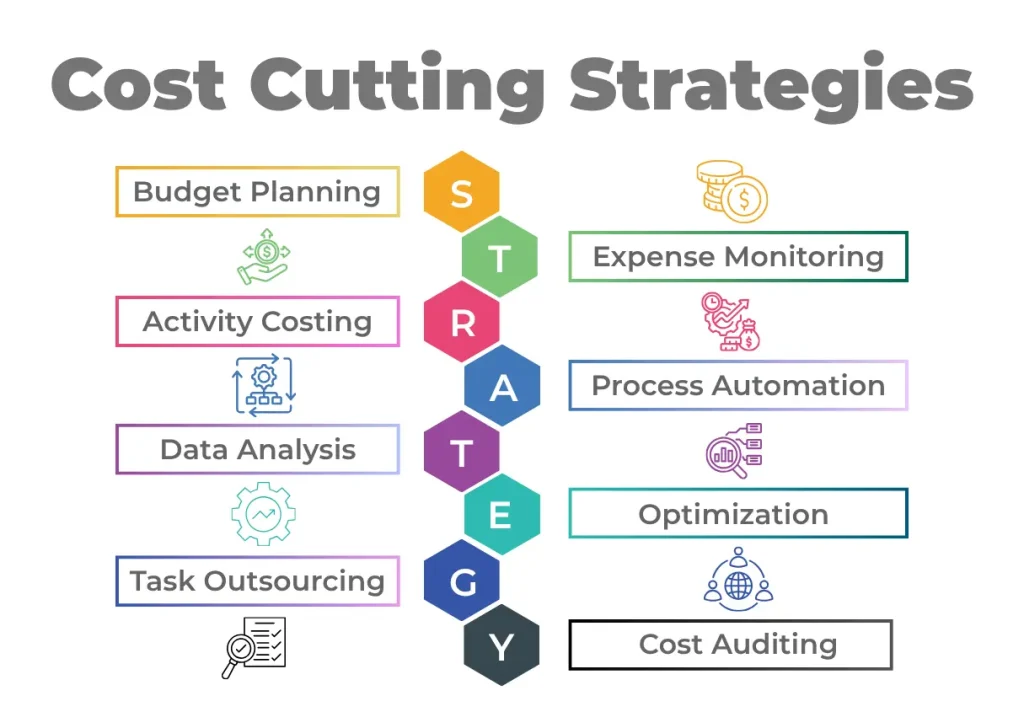
Now let’s explore modern and practical strategies that businesses can use today. These are some of the strategies that are easy, yet efficient, and common in business environments in 2026 to ensure effective financial control.
1. Budget Planning with Cost Forecasting
Cost control in accounting revolves around budget planning. A business may tend to lose its spending and experience financial shortfalls without a proper budget. In this strategy, companies carefully analyze their past financial data, such as rent, salaries, utilities, and marketing expenses. Based on this data, they predict future costs, which is known as cost forecasting. This assists in establishing practical financial boundaries of every department.
A strategized budget does not only help avoid unnecessary spending before it occurs, but also enhances long term financial planning. It serves as a good roadmap that helps businesses to know where to use their money and how to use it wisely.
2. Real-Time Expense Monitoring
Real-time expense monitoring is a modern strategy that allows businesses to track their expenses as they happen, instead of waiting for monthly reports. With the help of advanced accounting systems, every transaction is recorded instantly, and financial dashboards show live updates of spending.
Businesses also receive alerts when they are close to exceeding their budgets. This approach helps in quickly identifying unnecessary expenses and taking immediate action. It improves cash flow management and supports faster decision-making. All in all, real time monitoring enables businesses to have complete visibility and control over their finances at any time.
3. Activity-Based Costing (ABC Method Strategy)
Activity-Based Costing (ABC) is an accounting method that assigns costs to products, services, or operations based on the actual activities and resources they consume. Instead of spreading costs broadly, it identifies specific activities within a business and allocates costs using cost drivers, which gives a more accurate view of resource usage.
This strategy does not focus on overall costs. Instead, it separates costs into specific business activities such as production, marketing, and delivery. Each activity is assigned a cost, which allows businesses to clearly identify which processes are expensive and which are efficient.
This method helps in finding the real cost drivers and removing unnecessary or inefficient activities. It also supports better pricing decisions, as it provides a clearer understanding of actual operational costs. Overall, ABC gives businesses a deeper and more accurate understanding of their financial structure.
4. Automation in Accounting Processes
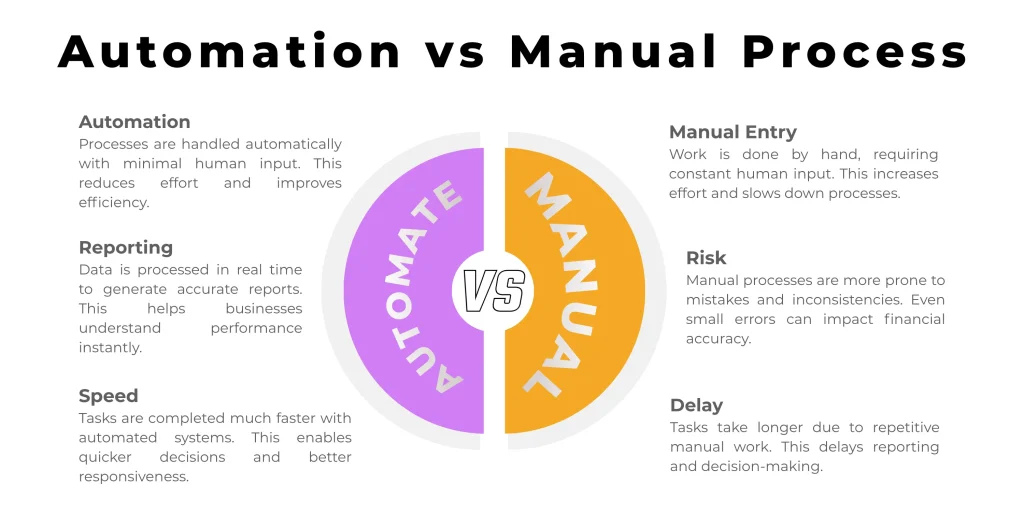
One of the most influential and popular accounting strategies of the present time is automation. It reduces manual work by using accounting software that automatically records transactions, generates reports, tracks expenses, and even sends payment reminders. This not only saves time, but also minimizes the possibility of human error.
With accounting automation, financial data becomes more accurate and reporting becomes faster. As a result, accountants can focus more on analyzing data and making strategic decisions instead of doing repetitive tasks. This enhances efficiency and enables businesses to manage costs more efficiently.
5. Data-Driven Cost Analysis
Data-driven cost analysis is a smart approach where businesses use financial data to understand their spending patterns. Rather than relying on guesswork when making decisions, companies gather and review expense data to determine trends. This helps in finding areas where costs are high or unnecessary.
With these insights, businesses can make better financial decisions, enhance the accuracy of budgeting, and plan more effectively, making it a key part of cost control in accounting. This strategy ensures that all financial decisions are supported by real data, making cost control in accounting more effective and accurate.
6. Waste Reduction and Process Optimization
This strategy focuses on reducing waste in business operations and improving efficiency. Waste can come in many forms, such as unused resources, extra time, or unnecessary steps in a process.
Businesses review their operations carefully and identify areas where improvements can be made as part of cost control in accounting. By removing unnecessary steps and using resources more efficiently, companies can reduce hidden costs that often go unnoticed. This not only lowers expenses but also improves productivity and increases profit margins. It is a realistic and most efficient strategy, particularly in such sectors such as manufacturing and services.
7. Outsourcing Non-Core Accounting Functions
Outsourcing is a cost-effective strategy where businesses hire external experts to handle certain accounting tasks instead of managing everything internally, making it an important part of cost control in accounting.
Common tasks that are outsourced include payroll processing, bookkeeping, tax filing, and financial reporting. This approach will aid in saving money on salaries, training, and office infrastructure. It also allows businesses to benefit from expert services without hiring full-time staff. Outsourcing non-core activities allows companies to concentrate more on their core business activities without compromising on their financial management.
8. Continuous Cost Auditing and Financial Review
Cost control in accounting is not a one-time process. It requires regular monitoring and review to stay effective. Continuous cost auditing involves checking financial records frequently to ensure everything is on track.
Businesses compare their actual expenses with planned budgets and identify any financial leaks or unusual spending. This helps in detecting problems early and taking corrective action before they become serious. Frequent reviews enhance transparency and financial discipline in the organization as well. In the long run, this strategy ensures stable and controlled financial performance.
Wrap Up!
Every successful business has a strong financial control. Cost control in accounting is not only about minimizing costs, but spending money in a smart, organized and strategic manner.
By applying these 8 detailed accounting strategies for effective cost control, businesses can improve efficiency, reduce waste, and increase profitability.
Understanding what is cost control in accounting is the first step, but real success comes when these strategies are applied consistently in daily business operations.
Frequently Ask Questions
What is cost control with an example?
Cost control means managing business expenses to keep them within a set budget. It helps reduce unnecessary spending and improve profits.
For example, companies reduce costs by limiting travel expenses & renegotiating supplier prices.
What are the 4 types of costs?
The 4 types of costs are fixed, variable, direct, and indirect costs. Fixed costs stay the same even if production changes, like rent or salaries. Variable costs change based on production, like raw materials. Direct costs are linked directly to making a product. Indirect costs are general expenses that support the business.

0 Comments