
Every business owner wants to know one thing: Is the business making money? The easiest way to find that answer is by looking at a Profit & Loss statement.
Whether you run a small business or a growing company, understanding this report helps you make better financial decisions. It shows how much money your business earned, how much it spent, and whether it made a profit or a loss during a specific period.
In this guide, you’ll learn what is a Profit & Loss statement, how to read it, and how to use it to improve your business performance.
Table of Contents
What Is a Profit & Loss Statement?
A Profit & Loss statement is a financial report that summarizes your business income, expenses, and profit over a specific period, such as a month, quarter, or year.
A Profit & loss statement is also known as an Income Statement or Statement of Earnings. Businesses use it to understand financial performance and measure profitability.
Unlike a balance sheet, which shows what a business owns and owes at a certain date, the Profit & Loss statement focuses on business activity over time.
Why Is a Profit & Loss Statement Important?
A business Profit & Loss statement helps you:
- Track business income and expenses
- Measure profitability
- Identify unnecessary spending
- Compare financial performance over different periods
- Prepare for tax filing
- Make better budgeting decisions
- Show financial health to investors or lenders
Reading this report regularly helps you spot problems before they become serious.
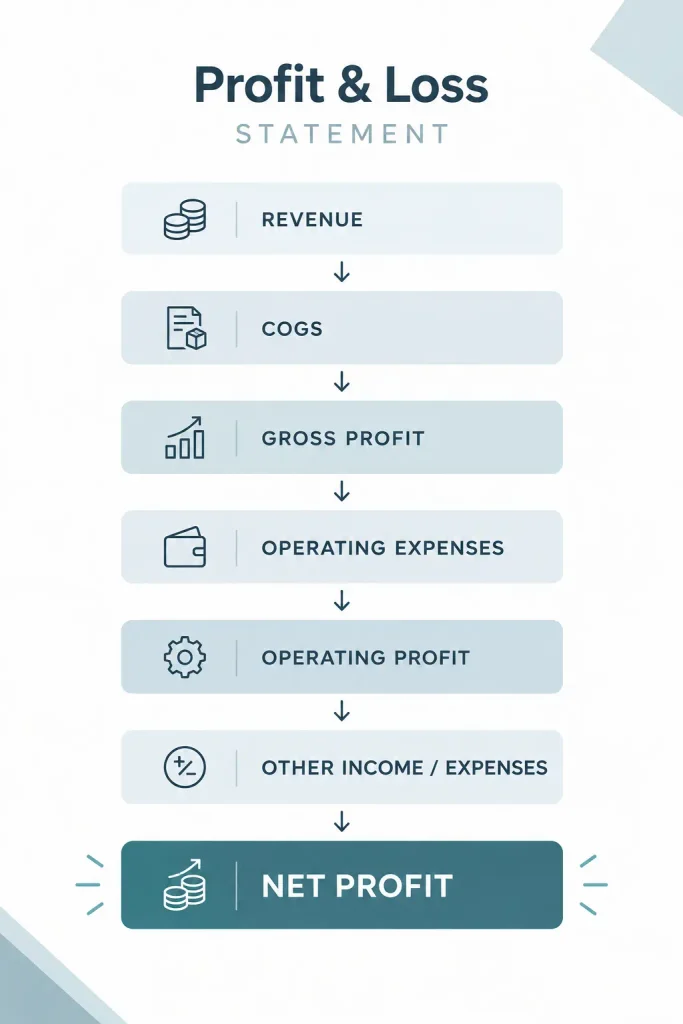
Main Sections of a Profit & Loss Statement
Understanding each section makes reading the report much easier.
1. Revenue (Sales)
Revenue is the total income your business earns from selling products or services before deducting any expenses.
For example:
- Product sales
- Service income
- Subscription revenue
- Other operating income
Higher revenue usually indicates business growth, but it doesn’t always mean higher profit.
2. Cost of Goods Sold (COGS)
COGS includes the direct costs of producing or delivering your products or services.
Examples include:
- Raw materials
- Manufacturing costs
- Packaging
- Direct labor
Subtracting COGS from revenue gives you your Gross Profit.
3. Gross Profit
Formula:
Gross Profit = Revenue – Cost of Goods Sold
Gross profit shows how much money remains after covering production costs.
A healthy gross profit means your pricing and production costs are well managed.
4. Operating Expenses
Operating expenses are the everyday costs of running your business.
These may include:
- Office rent
- Employee salaries
- Utilities
- Marketing expenses
- Software subscriptions
- Internet bills
- Insurance
Keeping operating expenses under control improves overall profitability.
5. Operating Profit
Operating profit shows how much money your business earns after paying normal business expenses.
It reflects how efficiently your business operates before taxes and interest are deducted.
6. Other Income and Expenses
Some businesses have additional income or costs that are not part of daily operations, such as:
- Interest earned
- Loan interest
- Investment income
- Asset sales
These items affect your final profit.
7. Net Profit (Bottom Line)
Net profit is the final amount left after subtracting all expenses, taxes, and interest.
Formula:
Net Profit = Total Revenue – Total Expenses
If the number is positive, your business made a profit.
If it’s negative, your business recorded a loss.
This is the most important figure in the entire Profit & Loss statement.
Sample Profit & Loss Statement
Here’s a simple sample Profit & Loss statement.
| Description | Amount |
| Revenue | $50,000 |
| Cost of Goods Sold | $20,000 |
| Gross Profit | $30,000 |
| Operating Expenses | $18,000 |
| Operating Profit | $12,000 |
| Taxes & Interest | $2,000 |
| Net Profit | $10,000 |
This simple example shows that after paying all business costs, the company earned a profit of $10,000.
How to Read a Profit & Loss Statement Step by Step
Reading a Profit & Loss statement example becomes much easier when you follow these simple steps.
Step 1: Check Total Revenue
Start by looking at total sales.
Ask yourself:
- Is revenue increasing?
- Is it higher than last month?
- Are sales meeting business goals?
Revenue tells you how much money is coming into your business.
Step 2: Review Cost of Goods Sold
Next, compare production costs with revenue.
If COGS is increasing too quickly, your profit margin may decrease.
Look for opportunities to reduce supplier costs or improve efficiency.
Step 3: Analyze Gross Profit
Gross profit shows how much income remains after covering production costs.
A declining gross profit could indicate:
- Higher supplier costs
- Lower selling prices
- Reduced efficiency
Step 4: Examine Operating Expenses
Review each expense category carefully.
Look for areas where spending has increased unexpectedly.
Questions to ask include:
- Is marketing spending generating results?
- Are payroll costs growing too quickly?
- Can any subscriptions be canceled?
Small savings across multiple expenses can significantly improve profits.
Step 5: Look at Net Profit
Finally, check your net profit.
A healthy business aims to increase net profit over time.
Compare profits with previous months or years to identify trends.
Common Mistakes When Reading a Profit & Loss Statement
Many business owners misunderstand financial reports.
Avoid these common mistakes:
- Looking only at revenue instead of profit
- Ignoring rising operating expenses
- Comparing different reporting periods incorrectly
- Forgetting seasonal sales changes
- Not reviewing the statement regularly
Reading your report every month helps you identify issues early.
Also Read: 6 Best Financial Ratios to Measure Business Performance
Tips for Using Your Profit & Loss Statement
To get the most value from your business Profit & Loss statement, follow these best practices:
- Review it every month.
- Compare current results with previous periods.
- Track expense trends.
- Monitor profit margins
- Set financial goals based on actual numbers.
- Use accounting software like CapiPlan or Odoo to generate accurate reports automatically.
Regular financial reviews help business owners make smarter decisions and stay prepared for future growth.
Wrap Up!
A Profit & Loss statement is one of the most valuable financial reports for any business. It clearly shows your income, expenses, and overall profit, helping you understand whether your business is moving in the right direction.
By learning what is a Profit & Loss statement and understanding each section, you can identify opportunities to reduce costs, increase profits, and make informed business decisions. Reviewing this report regularly gives you better control over your finances and supports long-term business success.
Frequently Ask Question
What is a Profit & Loss statement also known as?
A Profit & loss statement is also known as an Income Statement or Statement of Earnings. All three terms refer to the same financial report.
How often should I review my Profit & Loss statement?
Most businesses should review their Profit & Loss statement every month. Regular reviews help monitor profitability, control expenses, and make better financial decisions.

0 Comments