
Money is not just something a business earns; it is something a business must control. In 2026, competition is faster, expenses are higher, and financial mistakes cost more than ever. That is why strong money habits are no longer optional; they are survival tools.
Many businesses struggle not because they lack sales, but because they lack structure in handling money. Poor tracking, messy expenses, and weak planning slowly drain profits without notice. This is where money management tips become powerful. Simple systems, when followed consistently, can completely change how a business grows and survives.
In this guide, you will explore the most practical and best money management tips for businesses, along with tools that make financial control easier, smarter, and more automated.
Table of Contents
1. Master Cash Flow Before Anything Else
Cash flow is the real heartbeat of any business. Profit may look good on paper, but without cash in hand, daily operations can collapse quickly. A strong business always knows:
- How much money is coming in
- When it is coming in
- How much is going out
One of the most important simple money management tips is to review cash flow regularly instead of waiting for month-end surprises. Weekly tracking gives better control and prevents shortages.
Why it matters:
Even profitable businesses fail due to delayed payments and poor cash timing.
Tools to use:
- Xero
- Zoho Books
These tools provide real-time dashboards that show exactly where money stands at any moment.
2. Keep Business and Personal Money Completely Separate
This is one of the most basic yet most ignored money management tips for beginners. Mixing personal and business money creates confusion, hidden losses, and tax problems. When finances are separated, a business gets:
- Clear profit visibility
- Clean expense tracking
- Easier tax filing
- Professional financial structure
It also builds discipline in spending decisions because every expense is clearly visible.
Tools to use:
- Expensify (for tracking expenses)
- Payoneer
This step alone can instantly improve financial clarity.
3. Build a Practical Budget and Follow It
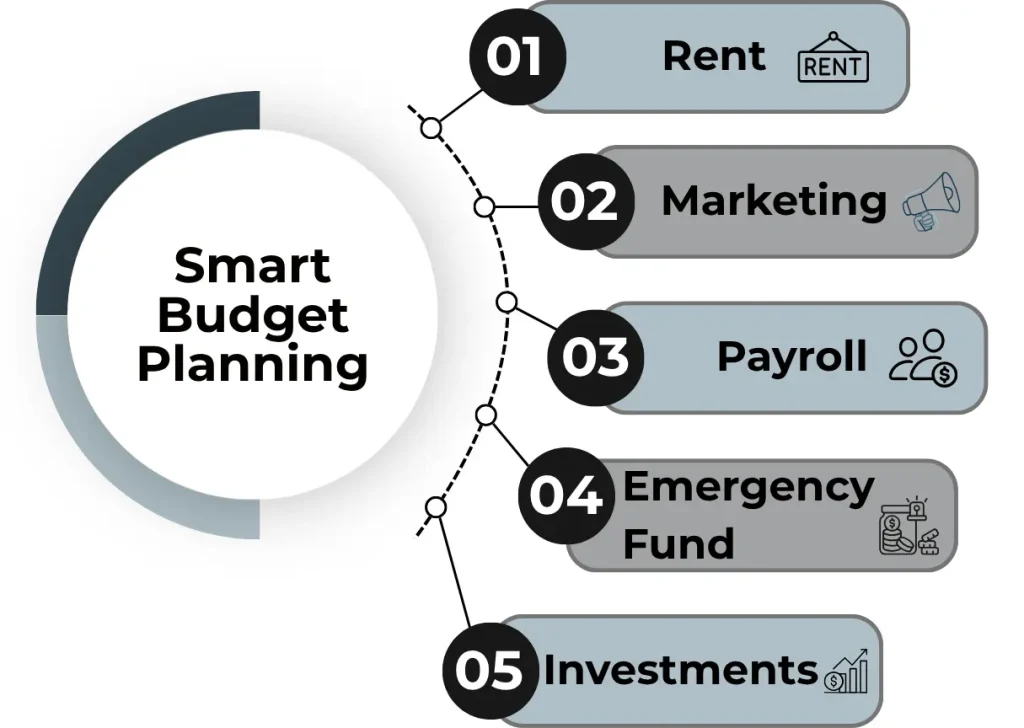
A budget is not just a document; it is a financial control system. Without it, money flows without direction. A proper business budget includes:
- Fixed costs (rent, salaries, software)
- Variable costs (marketing, operations)
- Emergency buffer
- Growth investments
One of the best money management tips is not just creating a budget but reviewing it regularly. Many businesses fail because they set a budget once and never update it.
A strong budget helps answer:
- Can we afford this expense?
- Are we overspending in one area?
- Where can we save money?
Tools to use:
- Microsoft Excel
- FreshBook
4. Automate Financial Tasks to Reduce Human Errors
Manual finance work slows everything down and increases mistakes. In 2026, automation is not optional; it is a competitive advantage.
Businesses should automate:
- Invoicing
- Payroll
- Recurring payments
- Expense tracking
Automation ensures consistency and removes delays in financial processes. This is one of the most powerful money management tips for business because it saves time and improves accuracy at the same time.
Tools to use:
- CapiPlan (invoicing automation)
- Gusto (payroll management)
- Stripe (payment processing)
With automation, financial systems run even when you are not actively managing them.
5. Control Expenses Like a Habit, Not a Task
Revenue brings money in, but expenses decide how much you keep. Many businesses grow revenue but still struggle because spending grows even faster. Smart expense management means:
- Reviewing costs monthly
- Cutting unnecessary subscriptions
- Negotiating supplier rates
- Avoiding impulse spending
One of the most simple money management tips is to ask before every expense: “Does this directly support growth or operations?” Over time, small savings create a big financial impact.
Tools to use:
- Expensify (expense tracking)
- Spendesk (spend control)
- Wave (free accounting and expense management)
6. Build an Emergency Fund for Business Stability
Unexpected situations are part of every business journey. Market changes, delayed payments, or sudden costs can affect operations instantly. An emergency fund protects a business during unstable periods. Ideally, it should cover at least 3–6 months of essential expenses.
This is one of the most underrated money management tips for beginners, but also one of the most important for long-term survival. It ensures the business does not rely on loans or debt during emergencies.
Tools to use:
- QuickBooks money-tracking features
7. Use Financial Reports to Make Smarter Decisions
Financial reports are not just numbers; they are business stories. They show what is working and what is not. Key reports include:
- Profit & Loss Statement
- Balance Sheet
- Cash Flow Statement
These reports help answer important questions like:
- Is the business actually profitable?
- Which areas are losing money?
- Can we invest in growth right now?
Review reports regularly is one of the most powerful money management tips for business growth because it turns guesswork into strategy.
Tools to use:
- CapiPlan Reporting
- QuickBooks reporting tools
- Xero dashboards
- NetSuite analytics
When decisions are based on data, business risks reduce significantly.
Why Money Management Tools Matter in 2026
Technology has completely changed financial management. Businesses that still rely on manual methods often fall behind.
Modern tools help with:
- Real-time financial tracking
- Automation of repetitive tasks
- Better forecasting
- Faster decision-making
Using the right tools is no longer just helpful; it is essential for survival in competitive markets.
Also Read: How Does CapiPlan Financial Reporting Software Save You Time
Wrap Up!
Money management is not about complex accounting rules. It is about discipline, awareness, and smart systems.
When businesses follow strong money management tips, they stop reacting to financial problems and start controlling them. From cash flow tracking to automation and budgeting, every step builds financial strength.
The goal in 2026 is simple; don’t just earn money, manage it better than your competitors. Because in the end, businesses don’t fail from lack of income… they fail from lack of control over it.
Frequently Ask Questions
What are the biggest wastes of money?
The biggest wastes of money are unnecessary subscriptions, impulse buying, and buying things that are rarely used. High-interest debt like credit card balances also drains money quickly. Overspending on status items and ignoring a proper budget are other major money leaks.
What is the money management app in UAE?
A money management app in the UAE is a digital tool that helps you track income, expenses, budgets, and savings in one place. These apps are designed for AED transactions and often support UAE banks, making it easier to manage daily spending and plan finances clearly without confusion. For Example: Capiplan is a money management platform that helps organize budgets, track cash flow, and manage finances in a simple, structured way.

0 Comments