
Money can either grow your business fast… or quietly hold it back.
In today’s fast-moving world, managing your business finances is no longer just about spreadsheets and saving receipts. It’s about being smart, fast, and a little strategic. The businesses that win today are not just working hard; they’re managing money smarter.
If someone is still using old methods, they are already falling behind. The real question is: are your finances helping your business grow, or slowing it down?
The good news? Learning how to manage small business finances in 2026 is easier, smarter, and more powerful than ever. These modern strategies will help take full control of your business finances like a true pro.
Table of Contents
10 Game-Changing Ways to Manage Business Finances Smarter
Below are 10 effective ways that will help you improve managing your business finances and build a stronger financial system for long-term success.
1. Build a “Profit-First” System
Most businesses wait to see what profit is left after spending. This approach often leads to overspending and low savings. A smarter way is to take profit first. As soon as money comes in, set aside a fixed percentage as profit. Then manage the remaining amount for expenses.
This method forces better financial discipline. It also ensures that the business is always making money, not just surviving. Over time, this simple shift can completely improve managing your business finances.
2. Focus on Strong Cash Flow
Profit is important, but cash flow is critical. A business can show profit on paper but still struggle to pay bills if cash is not available.
To maintain strong cash flow:
- Encourage faster payments from customers
- Avoid unnecessary delays in invoicing
- Control spending carefully
This approach ensures that the business always has enough money to operate smoothly. It is one of the most important parts of how to manage small business finances.
3. Use the “Money Bucket” Strategy

Keeping all money in one place can create confusion. It becomes hard to know how much is available for expenses, savings, or taxes. The money bucket method solves this problem. Divide your funds into different categories such as operating expenses, taxes, savings, and investments.
This system gives clarity and control. It ensures that money is used wisely and prevents overspending. It is a simple but powerful way of managing business finances effectively.
4. Track Finances in Real-Time
Many businesses still wait until the end of the month to review finances. This delay can lead to missed problems. Real-time tracking allows you to see your financial situation at any moment. You can quickly check income, expenses, and cash flow.
This helps in making faster decisions and avoiding losses. Real-time insights are essential for understanding how to manage a business finances in today’s fast-paced environment.
5. Turn Financial Data Into Action
Looking at numbers is not enough. What matters is what you do with them. Financial data should guide decisions. For example, if a product is not profitable, it may need pricing changes. If expenses are too high in one area, they should be reduced.
Using data in this way helps improve performance and growth. It turns simple tracking into smart decision-making, which is key to managing your business finances successfully.
6. Automate Your Financial Tasks
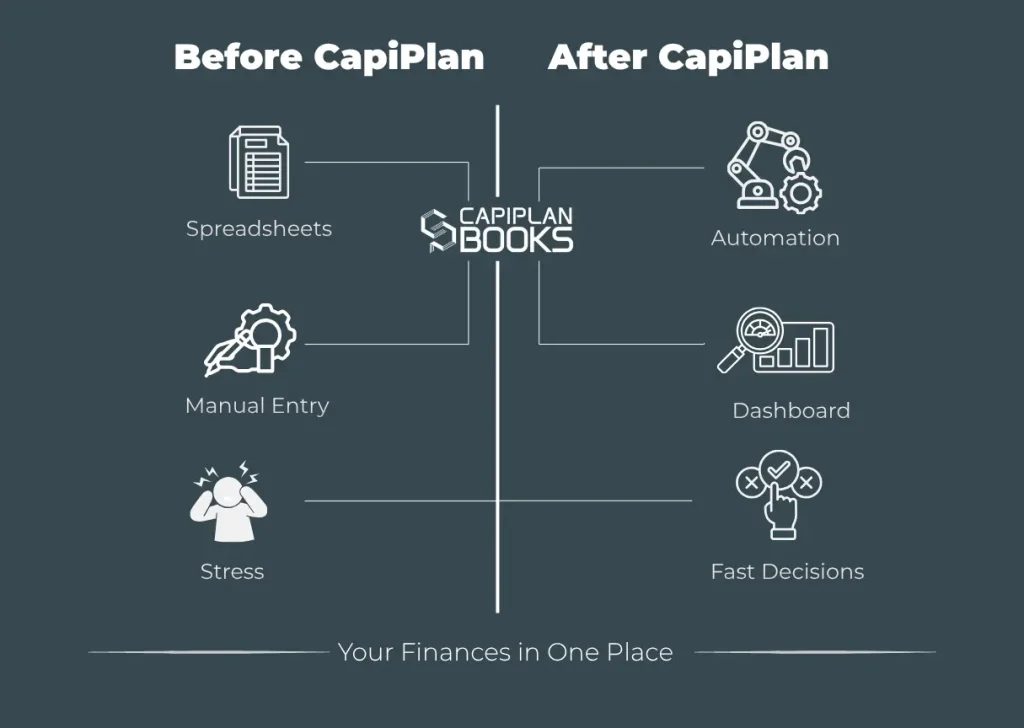
Manual work slows everything down and increases mistakes. Automation helps handle repetitive tasks like sending invoices, tracking expenses, and reminding clients about payments. This not only saves time but also improves accuracy.
Using the best app to manage business finances like CapiPlan or Xero can make daily operations smooth and stress-free. It also helps in how to organize your business finances without missing important details.
Automation allows business owners to focus more on growth instead of routine tasks.
7. Use AI Tools for Smarter Insights
Technology has made financial management more advanced than ever. AI tools like Microsoft Copilot, and Notion AI help analyze spending patterns, summarize financial data, and support smarter decision-making.
For more advanced finance tracking and forecasting, modern tools like Ramp, Brex, Puzzle.io, and QuickBooks AI are widely used by startups and growing businesses. These tools can automatically categorize expenses, track cash flow in real time, and even suggest cost-saving opportunities.
Using AI is a modern way of managing business finances effectively. It removes guesswork, improves accuracy, and gives businesses a strong competitive advantage in today’s fast-moving market.
8. Set Clear Financial Goals
Without clear goals, it is easy to lose direction. Set specific financial targets such as monthly profit, expense limits, or savings goals. These targets help measure progress and keep the business focused.
Having clear goals also makes it easier to plan ahead and stay motivated. It is a key part of how to organize your business finances with purpose.
9. Review Finances Weekly
Checking finances once a month is no longer enough. Problems can grow quickly if they are not noticed early. A weekly review helps track progress regularly. It allows quick adjustments and better control over spending and income.
This habit keeps business finances stable and reduces the risk of surprises. It also builds a strong routine for managing your business finances consistently.
10. Reinvest Smartly for Growth
Saving money is important, but growth requires smart investment. Reinvest profits into areas that bring value, such as better tools, marketing, or skilled employees. These investments can increase efficiency and revenue over time.
The key is to spend wisely, not blindly. Smart reinvestment plays a major role in managing business finances effectively and scaling the business.
Suggested: 8 Best Startup Accounting Strategies for Early-Stage Success
Wrap Up!
Success in business is not just about earning more; it is about managing money the right way. Those who understand their numbers, use modern tools, and make smart decisions are the ones who grow faster and stay ahead. Learning how to manage a business finances is no longer optional; it is a must for survival and success.
By applying these strategies, anyone can take control of their business finances, reduce stress, and build a stronger future.
The smartest move? Start today, stay consistent, and treat every financial decision as a step toward long-term growth.
Frequently Ask Questions
What is the 50/30/20 rule for managing money?
The 50/30/20 rule is a simple budgeting method where 50% of income is used for needs, 30% for wants, and 20% for savings or debt repayment. It helps in managing money in a balanced way. This rule makes budgeting easy and effective.
What are the 4 types of finance?
The four main types of finance are personal finance, corporate finance, public finance, and behavioral finance. Personal finance focuses on managing individual money like savings and expenses, while corporate finance deals with business funding and investments. Public finance covers government spending and taxation, and behavioral finance studies how human behavior affects financial decisions.

0 Comments