
Finance teams today deal with huge amounts of data, tight deadlines, and constant pressure to improve profits. Traditional financial processes are often slow and manual. They utilize spread sheets a lot and perform repetitive activities that consume precious time.
This is why AI in finance turns out to be a powerful tool for modern businesses. Artificial Intelligence assists organizations with more efficient financial data processing, repetitive work automation, and useful insights from financial information. It enables finance departments to be more productive and concentrate on critical decisions that contribute towards business development.
Many organizations are already using AI in finance and accounting to improve their financial operations. AI tools help reduce operational costs, detect financial risks earlier, and support better decision-making. When used correctly, AI can significantly improve return on investment (ROI) by increasing efficiency and reducing errors.
The following AI-powered finance tips can help businesses use artificial intelligence effectively and achieve better financial performance.
Table of Contents
What Is AI in Finance?
AI in finance refers to the use of artificial intelligence technologies such as machine learning, automation, and data analytics to improve financial operations. These technologies assist businesses to analyze financial information, detect patterns and make more smarter financial decisions.
AI is widely used across the AI in finance industry to simplify complex financial processes. Financial institutions, banks, and businesses are embracing AI to enhance speed, accuracy and efficiency.
Common uses of AI in finance include:
- Financial forecasting
- Fraud detection
- Expense management
- Risk assessment
- Customer service automation
Finance teams can manage financial data more effectively and make decisions based on real-time insights by using AI tools.
Smart AI-Powered Finance Tips for Better ROI
1. Automate Routine Financial Tasks
Automation is one of the most effective methods to use AI in finance and accounting. Several finance teams waste a significant amount of time performing repetitive functions, including invoice processing, expense tracking, and entry of financial data.
AI-powered automation tools can handle these tasks automatically. These systems can read invoices, extract information, and record financial transactions without manual effort. This saves time, as well as minimizes the possibility of human errors.
The speed of financial operations is also enhanced by accounting automation. For example, invoices can be processed faster and financial records can be updated instantly. This helps finance teams focus on more important tasks like financial planning and business strategy.
By reducing manual work and improving efficiency, automation directly contributes to better ROI.
2. Use AI for Accurate Financial Forecasting
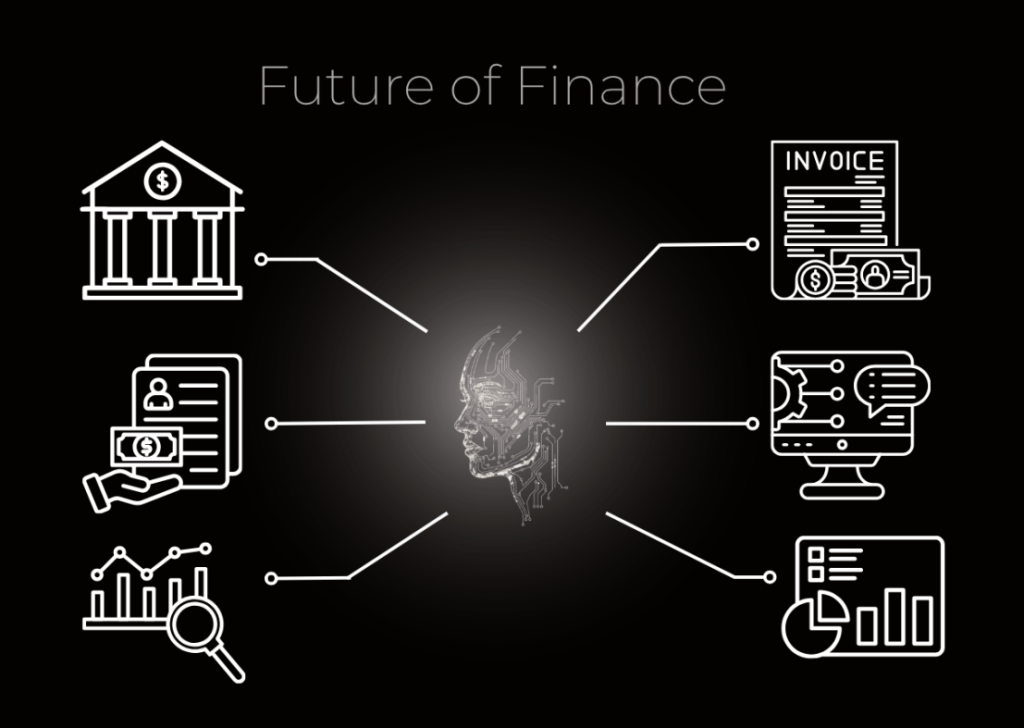
Financial forecasting assists companies in budgeting their finances, investment and future expenditure. Traditional forecasting methods usually depends on manual computations and the use of historical data.
AI improves forecasting by analyzing large datasets and identifying patterns that humans might miss. Machine learning models can analyze past financial records, market trends, and customer behavior to predict future financial outcomes. This renders the process of forecasting more precise and predictable. It helps businesses to predict cash flow, revenue growth, and financial risks better.
When companies use AI in finance departments for forecasting, they can prepare better financial strategies and avoid unexpected financial problems. Accurate forecasts enable the business to make more intelligent investment choices and this results in increased returns.
3. Improve Fraud Detection and Financial Security
Fraud is a serious problem in the financial world. Traditional fraud detection systems often rely on fixed rules that may fail to identify new types of fraud.
AI systems are more advanced because they learn from financial data and continuously improve their detection abilities. AI is capable of tracking thousands of transactions simultaneously and identifying suspicious patterns instantly.
In AI in finance and banking, machine learning models analyze customer transactions, payment behavior, and financial activity to identify unusual behavior. In the case of a suspicious transaction, the system is capable of alerting the finance team in real time. This enables businesses to act before the fraud can result in huge losses.
By preventing financial fraud, companies can protect their revenue and maintain customer trust, which ultimately improves overall ROI.
4. Make Better Financial Decisions with Data Insights
Companies produce a lot of financial data on a daily basis. Nevertheless, it is highly hard and time consuming to analyze this data manually. AI tools allow finance teams to work with massive data volumes within a short time frame and convert them into valuable insights. These tools can identify spending patterns, revenue trends, and profitable opportunities.
For example, AI can analyze customer purchase behavior and identify which products generate the highest profits. It can also indicate areas in which businesses are overspending their money.
With these insights, companies will be able to change their financial strategies and allocate the resources more efficiently. This is one of the most powerful ways AI in finance industry improves decision-making and supports business growth.
5. Strengthen Risk Management
Finance teams have a significant role in risk management. Businesses must constantly evaluate financial risks such as market changes, credit risks, and economic uncertainty. Using AI systems, risks can be detected earlier through the analysis of vast amounts of financial and market-related data. These systems can detect patterns that indicate possible financial threats.
For example, AI can evaluate a customer’s financial behavior before approving loans or credit. It can analyze payment history, financial stability, and other risk factors to predict whether the customer might default.
Using AI in finance departments for risk analysis assists businesses to minimize financial losses and make safer decisions regarding finances. Stronger risk management improves financial stability and protects long-term profitability.
6. Improve Customer Experience in Financial Services
Customer expectations are higher than ever in the financial industry. The customers demand faster responses, personalized services, and financial transactions. The AI technology assists financial institutions in enhancing customer experience by automating and personalizing it.
For example, AI chatbots can answer customer questions instantly and provide financial assistance at any time. The customer financial behavior can also be analyzed by AI systems to deliver personalized recommendations.
In AI in finance and banking, this helps companies build stronger relationships with customers and improve satisfaction. Happy customers are more likely to stay loyal to a business and use its services more often. This leads to higher revenue and improved ROI.
Suggested: AI in Accounting: Why Every Startup Needs It Today
Conclusion
The world of finance is quickly changing because of Artificial Intelligence. What once required hours of manual work can now be completed in minutes with AI-powered tools. From automation and fraud detection to forecasting and data analysis, AI in finance is helping businesses operate smarter and more efficiently.
Firms that are adopting AI are not just enhancing productivity, but also accessing new growth opportunities. With better insights, faster reporting, and stronger risk management, finance teams can make more confident decisions that drive profitability.
As the AI in finance industry continues to evolve, businesses that adopt these technologies early will gain a clear competitive advantage. With smart AI-powered finance strategies, organizations are able to save money, boost their effectiveness and eventually gain a higher ROI.
Frequently Ask Questions
What are the 4 types of AI risk?
In general, the following four types of AI risks are considered: misuse, misapply, misrepresent, and misadventure. They mean AI can be used wrongly, used in the wrong way, give false information, or accidents, errors, or unintended outcomes.
What skills are needed for AI in finance?
Skills needed for AI in finance include a combination of technical, analytical, and financial knowledge. Data analysis and machine learning skills are important for building and using AI models to process financial data. Programming skills, especially in languages like Python or R, is also essential.
A strong understanding of finance and accounting helps in interpreting financial information correctly. In addition, statistical and analytical skills are needed to identify trends and make accurate predictions. Problem-solving ability and familiarity with AI tools and software are also important for effectively using AI in financial decision-making.

0 Comments