
The world of finance is changing fast. What once needed long hours, manual work, and complex systems is now becoming simple and smart. The future of finance is driven by technology, especially Artificial Intelligence (AI) and automation. These tools are not just improving how businesses manage money; they are completely transforming the future of finance industry.
From faster payments to smart decision-making, finance is entering a new era. Businesses, startups, and even individuals are now using modern tools to save time and reduce errors. But what does this change really mean? And how will it shape the future of finance and accounting? Let’s explore.
Table of Contents
What Is the Future of Finance?
The future of finance is not just about numbers anymore; it is about intelligence. Finance is moving from static reports to dynamic systems that think, learn, and improve over time.
In the past, financial work was slow and reactive. Businesses looked at past data and made decisions later. Now, things are changing. Modern systems can predict outcomes, suggest actions, and even automate decisions.
This shift is turning finance into a real-time, insight-driven function. It is no longer just about tracking money. It is about understanding it, controlling it, and growing it. That is the real meaning of the future of finance.
The Role of Technology in the Future of Finance
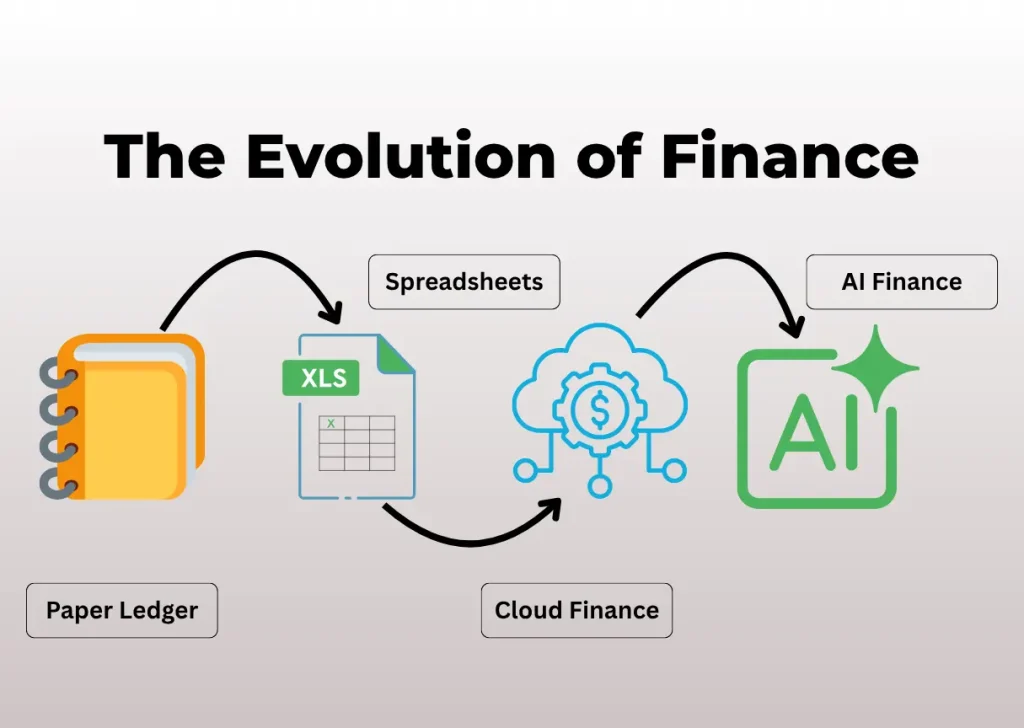
Technology is not just supporting finance anymore; it is redefining it. With the rise of AI in finance, every financial process is being rebuilt with speed, intelligence, and automation at its core.
1. Artificial Intelligence (AI)
AI is like a smart assistant that never sleeps. It studies patterns, learns from data, and gives insights that humans might miss. Businesses can now forecast revenue, manage risks, and plan better with AI. This is a major step forward in the future of finance.
2. Automation
Automation removes the burden of repetitive work. Instead of spending hours on tasks like invoicing or reconciliation, businesses can complete them instantly. This frees up time for more valuable work.
3. Cloud Technology
Cloud systems have made finance flexible. Teams can access data from anywhere, collaborate in real time, and keep everything secure in one place.
4. Data Intelligence
Finance today runs on data. But raw data is not enough. Technology turns it into meaningful insights that guide smarter decisions.
Together, these technologies are building a finance system that is faster, smarter, and more connected than ever before.
Fintech: The Future of Finance
Fintech is where innovation meets finance. It is changing how people send, receive, save, and manage money. So, is fintech the future of finance? It already is.
From mobile banking to AI-powered tools, fintech is removing traditional barriers. It is making financial services more accessible, faster, and user-friendly. Even small businesses can now use tools that were once only available to large corporations.
Fintech the future of finance is also about inclusion. More people can now access financial services through digital platforms, which was not possible before. This shift is not temporary. It is building a new financial ecosystem where speed and convenience come first.
Future of Finance and Accounting
The future of finance and accounting is not about replacing accountants—it is about upgrading their role. Routine tasks are disappearing. Intelligent systems are taking over data entry, calculations, and reporting. But this is creating space for something more important.
Accountants are now becoming advisors. They help businesses understand financial data, plan strategies, and make better decisions. Instead of asking “What happened?”, finance professionals are now answering “What should happen next?” This transformation is making finance more proactive and valuable than ever before.
Benefits of AI and Automation in Finance
AI and automation are not just improving finance; they are transforming how businesses operate by shaping modern finance trends.
1. Speed That Matches Business Needs: In today’s fast-moving world, waiting is not an option. Automated systems process transactions and generate reports instantly.
2. Accuracy You Can Trust: Even small errors can lead to big problems in finance. Automation ensures consistency and reduces risks.
3. Smarter Decisions: AI does more than analyze data, it explains it. Businesses get clear insights that help them make confident decisions.
4. Cost Optimization: Instead of increasing staff for repetitive tasks, businesses can rely on technology and use resources more efficiently.
5. Continuous Monitoring: Finance is no longer checked at the end of the month. Systems now monitor performance in real time, allowing quick action when needed.
These benefits clearly show why the future of finance automation is becoming essential for growth.
Challenges in the Future of Finance
Every transformation comes with its own challenges, and finance is no exception.
1. Data Privacy Concerns: As systems become digital, protecting sensitive financial data becomes critical.
2. Technology Adoption: Not every business is ready to shift quickly. Some struggle with understanding and implementing new tools.
3. Skill Gap: Employees need new skills to work with AI and automation. Training becomes important.
4. System Dependence: Relying heavily on technology means businesses must ensure systems are always reliable and secure.
These challenges are real, but they are manageable with the right approach and planning.
How Businesses Can Prepare for the Future
The future of finance industry belongs to those who adapt early. Businesses do not need to change everything overnight, but they must start. They can begin by adopting simple automation tools like CapiPlan and Xero and gradually move towards advanced systems. Training teams and building digital confidence is equally important.
Another key step is choosing the right tools. Not every solution fits every business. The focus should be on tools that solve real problems and improve efficiency. Staying updated with trends is also essential. Finance is evolving quickly, and businesses must evolve with it. Preparation today leads to stability tomorrow.
Also Read: Top 7 AI Tools for Finance Professionals in 2026
Wrap Up!
The future of finance is exciting and full of opportunities. AI, automation, and fintech are changing how financial systems work. What once seemed complex is now becoming simple and efficient.
As the future of finance industry continues to grow, businesses must adapt to stay competitive. Technology is no longer optional; it is essential. Those who embrace innovation will save time, reduce costs, and make better decisions.
In the end, the future of finance automation is not just about machines. It is about smarter ways of working, better insights, and stronger financial growth.
Frequently Ask Questions
What are the 4 types of finance?
The four main types of finance are personal finance, corporate finance, public finance, and investment finance. Each type focuses on managing money in different areas like individuals, businesses, governments, and markets. Together, they form the complete financial system.
What will accounting and finance look like in 2030?
By 2030, accounting and finance will be highly automated and data-driven. Most routine tasks will be handled by AI, while professionals will focus on strategy and planning. The future of finance and accounting will be more about insights, forecasting, and business growth.

0 Comments