
Every successful business runs on one thing: clear financial visibility. Without it, decisions become guesswork, and growth becomes unpredictable. That is where financial KPIs (Key Performance Indicators) come in.
These metrics are not just numbers on a report. They are powerful signals that show how healthy your business is, how fast it is growing, and where money is being made or lost. Whether you are a startup, a manufacturing company, or a large enterprise, tracking the most important financial KPIs helps you stay ahead of risks and unlock real growth opportunities.
In 2026, businesses are becoming more data-driven than ever. Companies are now using advanced tools like Datarails AI, Tableau AI and even top AI solutions for analyzing financial KPIs to understand performance in real time and make faster decisions.
This guide will walk you through the 7 best financial KPIs you should focus on, along with practical insights into how they help different industries like startups, manufacturing, and banking.
Table of Contents
Top KPIs to Improve Performance and Support Business Growth
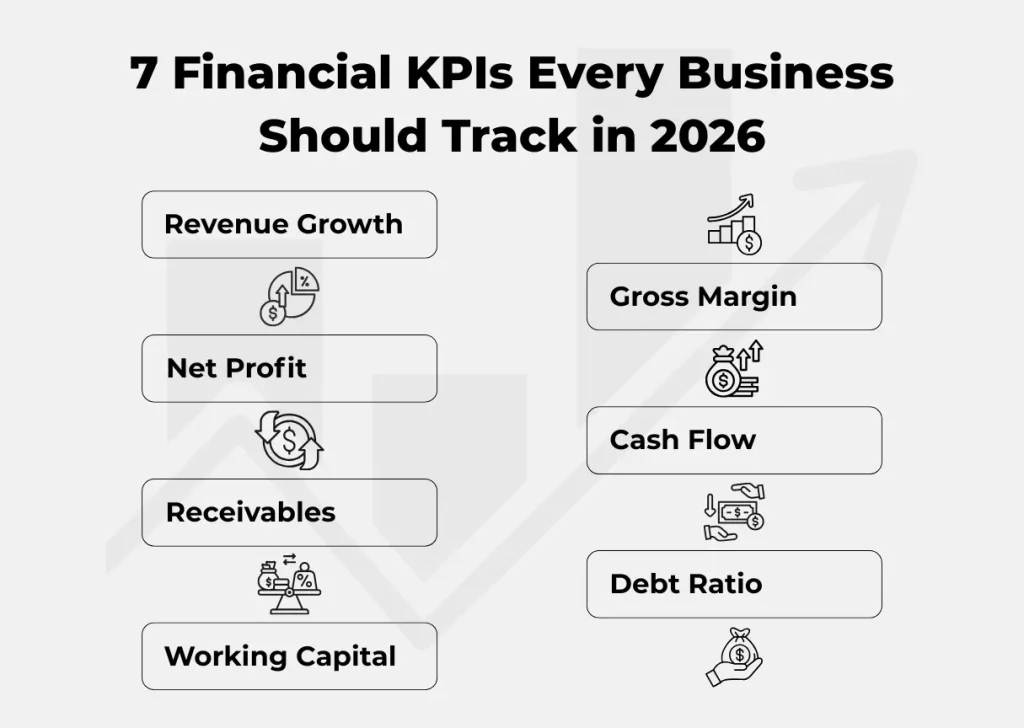
1. Revenue Growth Rate
One of the main financial KPIs every business must track is revenue growth. This KPI shows how quickly your business income is increasing over time. It helps you understand whether your sales strategies are working or not.
A strong revenue growth rate means your business is expanding, attracting more customers, and generating more income. It is especially important for financial KPIs for startups, where rapid growth is a key success factor.
Simply put:
- Higher revenue growth = Strong market demand and business expansion
- Lower revenue growth = A sign that sales strategies or overall performance may need improvement
2. Gross Profit Margin
Gross profit margin measures how much profit your business earns after subtracting the direct costs of producing goods or delivering services. It tells you how much money remains after covering production costs. This is one of the most important financial KPIs because it reflects operational efficiency.
Businesses often track this KPI to:
- Control production costs
- Improve pricing strategies
- Increase profitability
It is widely used in financial KPIs for manufacturing, where cost control is critical.
3. Net Profit Margin
Net profit margin is the real measure of profitability. It shows how much profit remains after all expenses, taxes, and interest are deducted. This KPI gives a full picture of financial performance.
If your net profit margin is increasing, it means:
- Your business is managing costs well
- Revenue is turning into actual profit
- Long-term sustainability is improving
This is one of the important financial KPIs for business because it reflects overall success.
4. Operating Cash Flow
Cash is the lifeline of any business. Operating cash flow measures how much cash your business generates from daily operations. Even if profits look strong, poor cash flow can create serious problems. This KPI helps you understand:
- Can the business pay its bills on time?
- Is cash coming in faster than it is going out?
- Is the business financially stable?
Many experts consider this one of the main financial KPIs for long-term survival.
5. Accounts Receivable Turnover
This KPI shows how quickly customers are paying you. If customers take too long to pay, your cash flow suffers. A high turnover means:
- Fast payments
- Healthy cash flow
- Efficient credit management
A low turnover may indicate payment delays or weak collection processes. This KPI is especially useful for banks financial KPIs and service-based businesses where credit transactions are common.
6. Debt-to-Equity Ratio
This KPI measures how much debt your business uses compared to owner equity. It helps you understand financial risk.
A high ratio means:
- Heavy reliance on borrowed money
- Higher financial risk
A low ratio means:
- Strong financial stability
- Better control over assets
Lenders and investors often review this KPI before making financial decisions, making it a critical metric in business finance.
7. Working Capital
Working capital shows the difference between current assets and current liabilities. It tells you whether your business can cover short-term expenses.
Positive working capital means:
- Healthy financial position
- Smooth daily operations
Negative working capital means:
- Cash shortages
- Possible financial stress
This is one of the most practical financial KPIs for business, especially for small companies and startups managing limited resources.
Why Financial KPIs Matter in 2026
Today’s business environment is fast, competitive, and data-driven. Tracking financial KPIs helps businesses monitor performance, identify risks, and make smarter business decisions.
Modern companies are now using automation and top AI solutions for analyzing financial KPIs to:
- Detect financial risks early
- Improve forecasting accuracy
- Optimize spending decisions
- Increase profitability
From startups to large enterprises, KPI tracking has become essential for survival and growth. Even industries like banking and manufacturing rely heavily on structured KPI systems to maintain stability and performance.
Suggested: Top 7 Accounting Trends in 2026 That Will Boost Profits
Conclusion: Make Financial KPIs Work for Your Growth in 2026
In today’s competitive market, guessing is not a strategy but the data is.
Tracking the right financial KPIs gives you full control over your business performance. Whether you are managing a startup, a manufacturing unit, or a large corporation, these metrics help you understand growth, profitability, cash flow, and risk in real time.
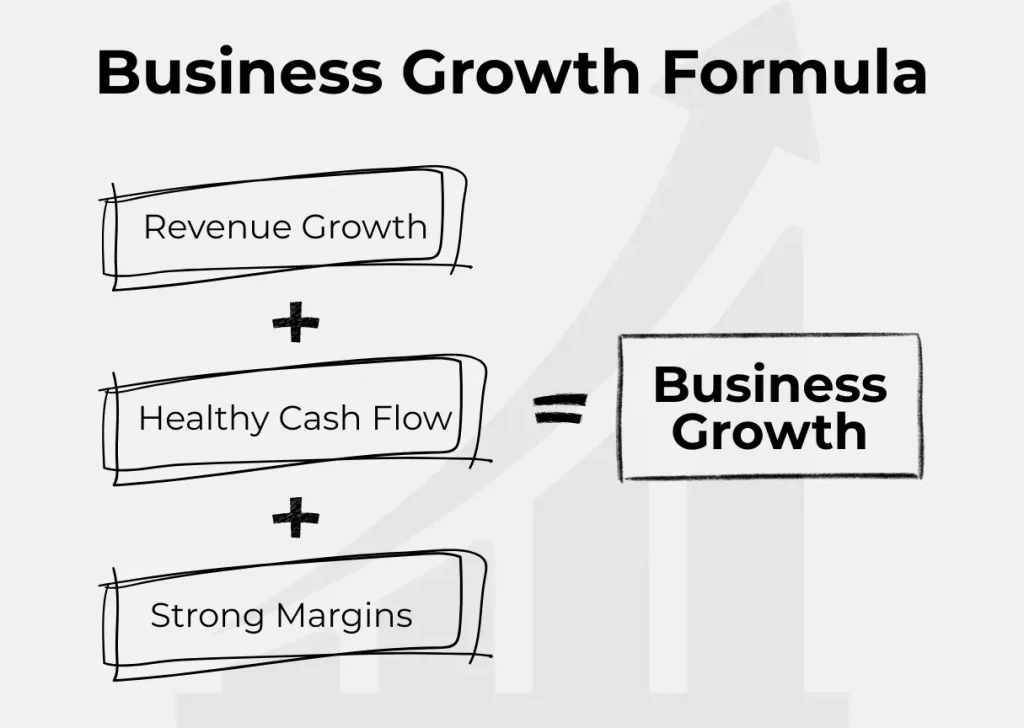
The most important financial KPIs like revenue growth, profit margins, and cash flow are not just accounting numbers; they are growth indicators. Businesses that monitor them consistently are the ones that scale faster and stay financially strong.
As we move into 2026, companies that embrace KPI-driven decision-making and use modern analytics tools will lead the market.
So start tracking your KPIs today because what gets measured, gets improved.
Frequently Ask Questions
What are the main categories of financial KPIs?
Common finance KPI’s categories include profitability, liquidity, efficiency, solvency, and growth. They are used to assess financial performance and stability.
Why are financial KPIs important for businesses?
Financial KPIs help businesses measure performance, track profitability, manage cash flow, and identify financial risks. By monitoring these KPIs regularly, companies can make smarter decisions, improve efficiency, and support long-term business growth.

0 Comments