
Managing business finances is about more than recording income and expenses. Businesses also need to understand their financial performance, track important numbers, and use data to make better decisions.
This is where financial analysis software can help. These tools turn financial data into reports, dashboards, KPIs, forecasts, and useful business insights.
Here are six financial analysis software tools worth considering in 2026.
Table of Contents
1. Cube
Cube is a financial planning and analysis (FP&A) platform that helps businesses manage financial data, create budgets, forecast future performance, and make better financial decisions. It works with spreadsheets and connects financial data from different business systems.
Key Features:
- Financial reporting and analysis
- Budgeting and forecasting
- Financial dashboards
- Cash flow planning
- Scenario planning
- Financial data integration
- Performance tracking
Cube is a good option for businesses that rely on spreadsheets but want to improve financial planning and analysis. It helps finance teams organize data, reduce manual work, and gain clearer insights into business performance.
2. Syft Analytics
Syft Analytics focuses on financial reporting, analysis, and business performance. It can help businesses review financial statements, monitor KPIs, and understand changes in financial performance.
Its reporting features are useful for businesses and accounting professionals that want to turn financial data into clear dashboards and reports. Syft is also listed among the financial reporting and analysis tools available to small businesses in 2026.
Key features:
- Financial reporting
- KPI dashboards
- Financial analysis
- Forecasting
- Multi-entity reporting
- Custom reports
For businesses managing several entities, its reporting and consolidation capabilities can make financial data easier to review.
3. QuickBooks Online
QuickBooks Online is widely used for business accounting and also provides financial reporting and analysis features. Its advanced plans include customizable reports, dashboards, and financial forecasting capabilities.
Businesses can use it to monitor important financial information such as income, expenses, profit, cash flow, and other performance indicators.
Key features:
- Profit and loss reports
- Balance sheet reports
- Cash flow information
- Custom reports
- Financial dashboards
- Forecasting
- Expense tracking
It can be a practical option for businesses that want accounting and financial analysis in the same system.
4. Zoho Books
Zoho Books combines accounting with financial reporting tools. It allows businesses to manage transactions while also generating reports that help them understand their financial position.
Its reporting capabilities can be useful for small and growing businesses that want an affordable way to manage accounting and analyze financial data.
Key features:
- Financial reports
- Profit and loss statements
- Balance sheets
- Cash flow reports
- Expense tracking
- Invoicing
- Tax reporting
Zoho Books can work well for businesses that do not need a separate advanced financial planning platform but still want useful financial insights.
5. CapiPlan
CapiPlan is an all-in-one financial and business management platform designed to bring accounting, reporting, and business operations together.
Instead of managing financial information across different tools, businesses can use CapiPlan to manage money, sales, purchases, inventory, customers, suppliers, and reports from one platform.
Its reporting features include financial reports such as Profit & Loss, Balance Sheet, Trial Balance, and Transaction Register. Businesses can use these reports to review their financial position and track business performance.
Key features:
- Profit & Loss reports
- Balance Sheet
- Trial Balance
- Transaction Register
- VAT reports
- Multi-currency financial management
- Real-time financial information
- Money and transaction management
- Inventory and sales reports
CapiPlan also offers a free plan, making it an option for businesses looking for free financial analysis software to start managing their finances without an upfront subscription cost.
6. Xero
Xero is a cloud-based accounting platform that can also support financial reporting and business performance analysis. It helps businesses keep financial information organized and access reports online.
Xero is also commonly used as a data source for dedicated financial analysis platforms such as Fathom and Syft Analytics.
Key features:
- Financial reporting
- Cash flow tracking
- Profit and loss reports
- Balance sheet reports
- Expense management
- Bank reconciliation
- Business performance tracking
It can be useful for businesses that want cloud accounting with access to financial information from different locations.
How to Choose Financial Analysis Software
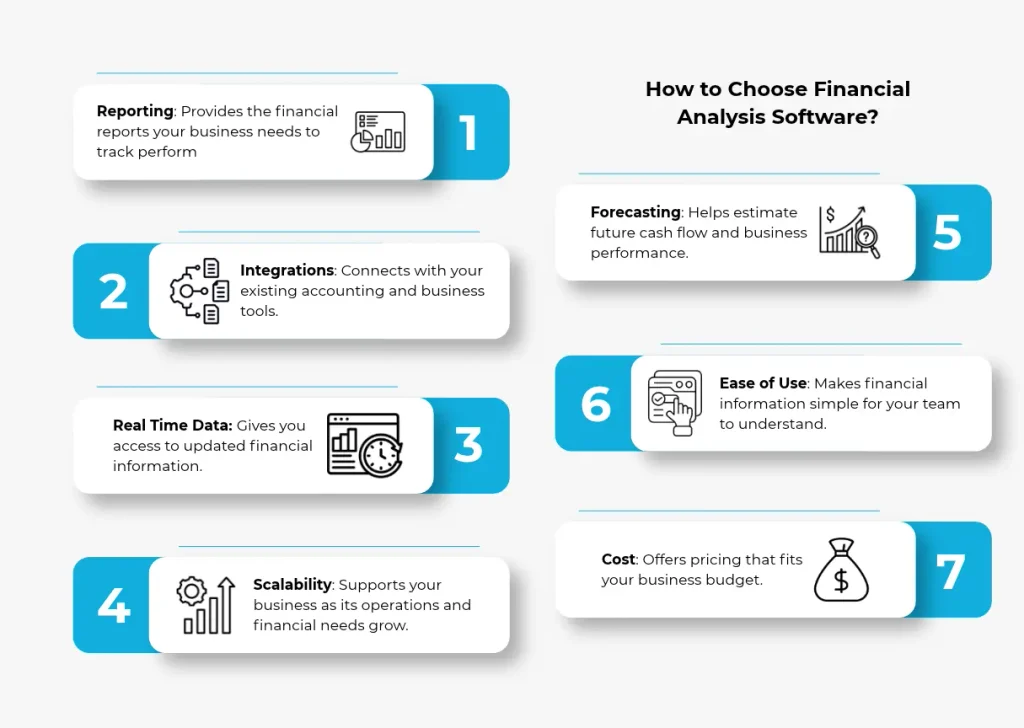
The right software depends on what your business needs.
Before choosing from the top financial analysis software options, consider:
- Reporting: Does it provide the financial reports you need?
- Real-time data: Can you access updated financial information?
- Forecasting: Does it help you plan future cash flow and performance?
- Integrations: Can it connect with your existing accounting tools?
- Scalability: Can it support your business as it grows?
- Ease of use: Can your team understand and use the reports easily?
- Cost: Does the pricing match your budget?
A small business may only need accounting reports and dashboards, while a larger company may need advanced forecasting, scenario planning, and multi-entity analysis.
Suggested: 7 Numbers Every Business Dashboard Should Show
Final Thoughts
The right financial analysis software can make financial data easier to understand and use. Instead of spending hours working through spreadsheets, businesses can use automated reports, dashboards, KPIs, and financial insights to keep track of performance.
Fathom, Syft Analytics, QuickBooks Online, Zoho Books, CapiPlan, and Xero all offer different approaches to financial management and analysis. The best choice depends on your business size, reporting needs, budget, and the level of financial analysis you require.

0 Comments