
Cash can leave a business faster than you expect. Sales may look strong, but slow collections, excess inventory, or rising expenses can still create a cash shortage.
That is why tracking the right cash flow metrics matters. They help you see where your money is coming from, where it is getting stuck, and whether your business has enough cash to keep moving.
Here are five key cash flow metrics worth tracking in 2026.
Table of Contents
1. Operating Cash Flow
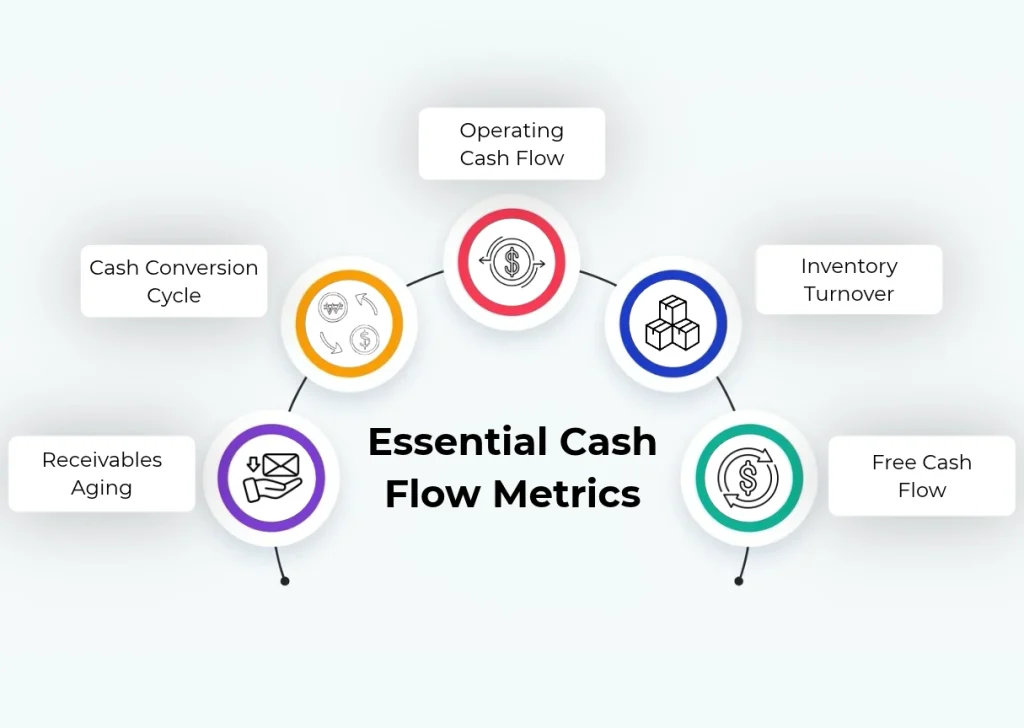
Operating cash flow shows how much cash your business generates from its normal day-to-day operations. It focuses on the actual cash coming in and going out through activities such as sales, supplier payments, salaries, and operating expenses.
Unlike profit, operating cash flow gives you a clearer view of the cash your business is actually generating from its core activities. A business can report a profit while still facing cash pressure if customers have not paid their invoices yet.
Why should you track it?
Regularly monitoring operating cash flow can help you:
- See whether your core operations are generating cash
- Identify negative cash flow trends early
- Understand whether expenses are putting pressure on liquidity
- Plan for upcoming payments and investments
- Make better day-to-day financial decisions
A single negative month does not necessarily mean there is a serious problem. Seasonal sales, large purchases, or one-time expenses can affect the number. The important thing is to look at the trend over several periods.
2. Cash Conversion Cycle
Your business may make sales every day, but how quickly does that money actually return to your bank account?
The cash conversion cycle (CCC) helps answer this question. It measures the time your cash stays tied up in operations before you receive payment from customers.
The calculation looks at three areas:
- Inventory: How long products remain in stock before being sold
- Accounts receivable: How long customers take to pay
- Accounts payable: How long your business takes to pay suppliers
The basic formula is:
Cash Conversion Cycle = Days Inventory Outstanding + Days Sales Outstanding − Days Payable Outstanding
A shorter cycle generally means your business is converting its investment into cash faster. A longer cycle can mean more money is tied up in inventory or unpaid invoices.
Why should you track it?
Tracking CCC can help you find cash bottlenecks. For example, if your inventory is moving slowly while customers are also taking longer to pay, your cash can remain tied up for much longer.
Reviewing this metric regularly can help you improve purchasing, collections, and supplier payment planning.
3. Accounts Receivable Aging
You made the sale. But have you collected the money?
An accounts receivable aging report shows how much customers owe you and how long their invoices have been outstanding. It usually groups unpaid invoices into time periods, such as current, 30 days, 60 days, and 90+ days.
This makes it easier to spot customers whose payments are becoming overdue.
For example, imagine your business has AED 100,000 in unpaid invoices. At first, that might not seem concerning. But if a large portion has been outstanding for 60 or 90 days, your business may already be feeling the cash flow impact.
Rhodium Digital highlights receivables aging as an early indicator of cash flow pressure because delayed customer payments can quickly reduce available cash.
Why should you track it?
A monthly review can help you:
- Follow up on overdue invoices
- Identify slow-paying customers
- Improve payment terms
- Reduce outstanding receivables
- Forecast when expected cash may actually arrive
It also helps separate sales growth from cash collection. More sales do not automatically mean more cash in the bank if customers are taking too long to pay.
4. Inventory Turnover
For product-based businesses, inventory can quietly absorb a large amount of cash.
Inventory turnover measures how efficiently your business sells and replaces its stock over a specific period. If products stay on shelves for too long, your money remains tied up instead of being available for other business needs.
Low inventory turnover may indicate slow-moving products, excess purchasing, weak demand, or poor inventory planning. High turnover can indicate that stock is moving efficiently, although extremely high turnover can also mean you are carrying too little inventory.
Rhodium Digital recommends monitoring inventory turnover regularly because slow-moving stock can tie up cash and increase carrying or obsolescence costs.
Why should you track it?
Tracking this metric can help you:
- Identify slow-moving products
- Avoid unnecessary stock purchases
- Reduce excess inventory
- Improve purchasing decisions
- Free up cash tied up in stock
For service businesses that do not carry physical inventory, work-in-progress aging can provide a similar view by showing how long projects remain unfinished before they can be billed.
Also Read: 7 Business Accounting Tips for Bigger Gains
5. Free Cash Flow
Free cash flow is one of the most useful free cash flow metrics for understanding how much cash remains after your business covers its operating needs and capital investments.
A commonly used calculation is:
Free Cash Flow = Operating Cash Flow − Capital Expenditures
Capital expenditures can include spending on equipment, technology, vehicles, or other long-term business assets.
For example, if your business generates $150,000 in operating cash flow and spends $40,000 on new equipment, your free cash flow would be $110,000.
That remaining cash can potentially be used for activities such as:
- Reinvesting in the business
- Building cash reserves
- Paying down debt
- Funding future projects
- Supporting business expansion
However, negative free cash flow is not automatically a problem. A business may have negative FCF during a period of planned expansion because it is making significant investments in equipment, technology, or other assets. The key is understanding why free cash flow is negative and whether the spending fits the business plan.
How Often Should You Track Cash Flow Metrics?
Monthly tracking is a practical starting point for most businesses.
A monthly review gives you enough data to identify trends without waiting until the end of the quarter or year. It can also help you catch changes in customer payments, inventory movement, operating cash flow, and spending before they become bigger problems.
A simple monthly dashboard could include:
| Cash Flow Metric | What It Tells You |
| Operating Cash Flow | Whether daily operations are generating cash |
| Cash Conversion Cycle | How quickly cash moves through the business |
| Accounts Receivable Aging | How long customers are taking to pay |
| Inventory Turnover | How efficiently stock is being converted into sales |
| Free Cash Flow | How much cash remains after capital spending |
The goal is not to track every number available. Focus on the best cash flow metrics for your business model and compare them over time.
Use Cash Flow Metrics to Make Better Decisions
Cash flow metrics are more useful when they are connected to everyday business decisions.
For example, a rising cash conversion cycle may tell you to review customer payment terms or inventory levels. Increasing overdue receivables may signal a need for stronger collection follow-ups. Falling operating cash flow could encourage you to review pricing, expenses, or sales performance.
Modern financial management software can also make this process easier by bringing financial data, transactions, reports, and cash flow information into one place.
Instead of checking disconnected spreadsheets, business owners can use financial dashboards and reports to monitor important numbers and spot changes faster.
Final Thoughts
Revenue tells you how much you sold. Profit tells you what you earned. Cash flow tells you what is actually happening with your money.
By tracking these five cash flow metrics regularly, you can spot pressure earlier, understand where cash is getting stuck, and plan your next move with better financial visibility.
The real value is not just knowing the numbers. It is knowing what those numbers are telling you about your business.

0 Comments