
Not every customer, product, or service contributes equally to your profits. Some bring in strong returns, while others take more time and resources than they are worth.
Knowing where your profits really come from can help you make smarter decisions, focus on what works, and grow your business with confidence.
Table of Contents
Why Profitability Matters
Sales numbers alone do not show the complete picture. A product may generate high sales but have low profit margins. Similarly, a customer who places large orders may require frequent discounts, support, or extra resources.
Looking at profitability helps you understand what is actually contributing to your bottom line.
When you know your most profitable customers, products, and services, you can:
- Focus your marketing on high-value opportunities
- Improve pricing and profit margins
- Reduce unnecessary costs
- Allocate resources more effectively
- Create better customer retention strategies
- Make informed decisions about products and services
How to Identify Your Most Profitable Customers
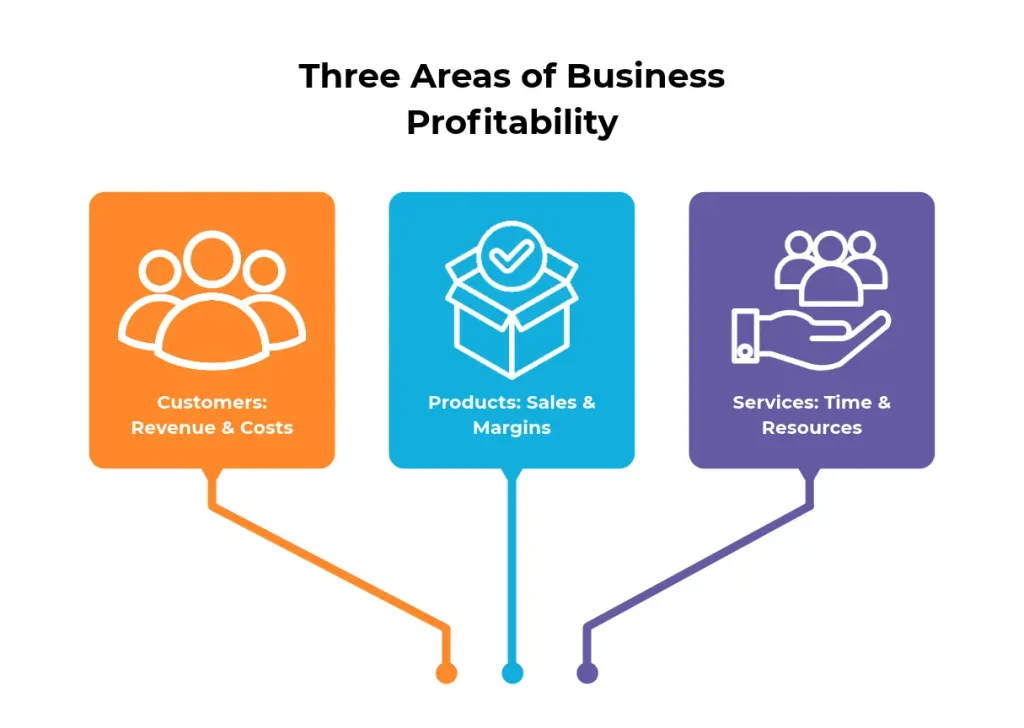
Your best customers are not always the ones who spend the most. A profitable customer is one who generates good revenue while costing the business less to serve.
Here are some ways to identify them.
1. Look Beyond Total Sales
Start by reviewing how much each customer spends. Then compare their purchases with the costs involved in serving them.
Consider factors such as discounts, returns, delivery costs, customer support, payment delays, and service time. This gives you a clearer picture of which customers are truly profitable.
2. Check Purchase Frequency
Customers who make regular purchases can provide more value over time. Review how often customers buy from you and their average order value.
A customer who makes smaller purchases regularly may be more valuable than someone who makes one large purchase and never returns.
3. Consider Customer Lifetime Value
Customer lifetime value shows how much revenue a customer may generate throughout their relationship with your business.
Customers with strong lifetime value can become an important part of your long-term growth strategy. Once you know who they are, you can create offers and experiences that encourage them to stay.
4. Analyze Customer Costs
Some customers require more resources than others. For example, one customer may need frequent support, custom requests, urgent deliveries, or extensive communication.
Include these costs when analyzing customer profitability. This can help you understand the difference between high-revenue customers and genuinely profitable customers.
How to Retain Profitable Customers
Finding profitable customers is only the first step. The next goal is to retain profitable customers and increase their value over time.
Start by understanding what these customers buy, when they buy, and what they value most. You can then provide relevant offers, loyalty rewards, personalized communication, or additional services.
You should also monitor customer satisfaction. A strong relationship can encourage repeat purchases and reduce the cost of constantly finding new customers.
However, avoid giving unnecessary discounts simply to keep customers. Your retention strategy should support both customer satisfaction and healthy profit margins.
Also Read: Working Capital Ratio: What Does It Say About Financial Health?
How to Find Your Most Profitable Products
Products with the highest sales are not always your most profitable products. To find the right ones, compare revenue with the total cost of selling each product.
Consider:
- Purchase or production costs
- Packaging expenses
- Storage costs
- Shipping and delivery
- Discounts
- Returns and refunds
- Marketing expenses
For example, Product A may generate $50,000 in sales but leave only $5,000 in profit. Product B may generate $30,000 in sales but produce $10,000 in profit.
Product B would be more profitable despite having lower sales.
Review product-level profit margins regularly. This can help you decide which products deserve more marketing, which need price adjustments, and which may no longer be worth carrying.
How to Identify Profitable Services
Service businesses should look at profitability in a slightly different way. Revenue is important, but the time and resources required to deliver a service also matter.
Start by calculating how much each service earns compared with the time, labor, software, materials, and other resources required.
For example, a consulting service may generate good revenue but require several hours of work from highly paid employees. Another service may generate slightly less revenue but take much less time to deliver.
The second service could have a better profit margin.
Tracking the time and cost associated with each service can help you understand which services contribute most to your business.
Use Data to Make Better Profit Decisions
Once you collect customer, product, and service data, bring it together in one place. Accounting and business management software can make this easier by helping you track sales, costs, invoices, payments, and financial reports.
Regular reporting can show which customers generate the highest returns, which products have stronger margins, and which services are consuming too many resources.
You can then use these insights to adjust pricing, improve operations, and focus on profitable opportunities.
Create a Profitability Review Process
Profitability can change over time. A customer who was highly profitable last year may become less profitable because of higher service costs or lower order volumes. Product costs and market conditions can also change.
Set a regular schedule to review profitability. Depending on your business, this could be monthly, quarterly, or twice a year.
Track key areas such as:
- Customer revenue and costs
- Product profit margins
- Service delivery costs
- Customer retention
- Average order value
- Discounts and returns
- Operating expenses
Regular reviews help you spot changes before they have a major impact on your business.
Common Mistakes to Avoid
When analyzing profitability, avoid focusing on revenue alone. High sales do not automatically mean high profits.
You should also avoid making decisions based on a single month of data. Look at trends over time to get a more reliable picture.
Another common mistake is ignoring indirect costs. Marketing, administration, delivery, support, and storage can all affect profitability.
Finally, do not assume that every low-profit customer or product should immediately be removed. Some may have strong growth potential or support other profitable areas of your business.
Wrap Up!
Finding your most profitable customers, products, and services gives you a clearer view of where your business makes money. Track revenue, costs, margins, and customer behavior regularly to see what deserves more attention.
The goal is simple: sell smarter, serve better, and focus on what brings the strongest returns.

0 Comments