
Every business that sells products needs the right amount of inventory at the right time. Having too much stock ties up money, while having too little leads to missed sales and unhappy customers. This is why inventory planning is one of the most important parts of running a successful business.
Good inventory planning helps businesses know what to order, when to order it, and how much to keep in stock. It improves cash flow, reduces waste, and makes daily operations much smoother.
In this blog, you’ll learn what is inventory planning, why it matters, different inventory planning methods, and how inventory planning software can make the process easier.
Table of Contents
What Is Inventory Planning?
So, what is inventory planning?
Inventory planning is the process of deciding how much inventory a business should keep to meet customer demand without overstocking or running out of products.
It involves:
- Forecasting customer demand
- Tracking current stock levels
- Planning future purchases
- Managing supplier lead times
- Maintaining the right inventory balance
The goal is simple: always have enough products available without spending more money than necessary.
Why Inventory Planning Is Important
Without proper inventory planning, businesses often face problems like:
- Running out of popular products
- Buying more inventory than they can sell
- Higher storage costs
- Slow-moving stock
- Poor customer satisfaction
- Reduced profits
A strong inventory planning strategy helps businesses avoid these challenges while improving efficiency and profitability.
Benefits of Inventory Planning
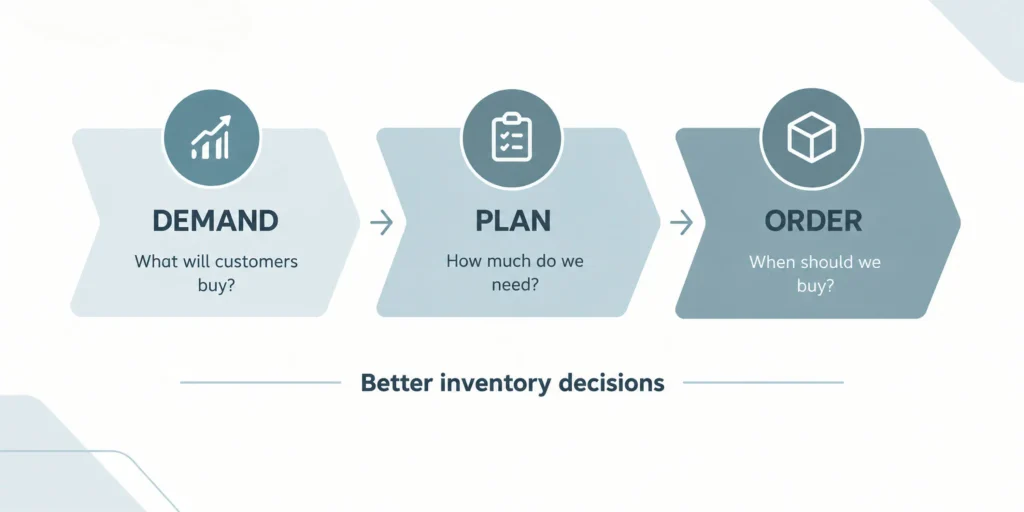
Better Cash Flow
Inventory costs money. Buying too much stock means your cash stays locked in products sitting on shelves. Proper inventory planning helps you purchase only what you need, leaving more money available for other business expenses.
Fewer Stockouts
Customers expect products to be available when they place an order.
Good planning reduces the risk of stock shortages and helps businesses meet customer demand consistently.
Lower Storage Costs
Extra inventory requires more warehouse space, handling, and insurance.
Effective inventory planning helps reduce unnecessary storage expenses.
Improved Customer Satisfaction
When products are available and orders are delivered on time, customers trust your business more.
Satisfied customers are also more likely to return and recommend your business to others.
Better Business Decisions
Inventory planning gives business owners clear insights into:
- Fast-selling products
- Slow-moving inventory
- Seasonal demand
- Purchasing trends
These insights support smarter purchasing and sales decisions.
Common Inventory Planning Methods
There are several methods of inventory planning, and businesses often use more than one depending on their needs.
Demand Forecasting
This method predicts future sales by analyzing:
- Past sales
- Seasonal trends
- Customer buying patterns
- Market changes
Better forecasting leads to more accurate purchasing decisions.
ABC Analysis
ABC Analysis groups inventory into three categories:
- A Items: High-value products that need close monitoring.
- B Items: Medium-value products with moderate demand.
- C Items: Low-cost products that usually sell in large quantities.
This helps businesses focus on managing the most important inventory first.
Just-in-Time (JIT)
With the Just-in-Time method, inventory is ordered only when needed.
Benefits include:
- Lower storage costs
- Less unused inventory
- Better cash flow
However, businesses must have reliable suppliers because delays can affect sales.
Safety Stock Planning
Unexpected demand or supplier delays can happen.
Safety stock is extra inventory kept as a backup to prevent stockouts during emergencies or busy seasons.
Economic Order Quantity (EOQ)
EOQ helps businesses calculate the ideal order size.
It balances ordering costs and storage costs to reduce total inventory expenses.
Challenges in Inventory Planning
Even experienced businesses face inventory planning challenges. Some common problems include:
Changing Customer Demand
Customer buying habits can change quickly, making demand difficult to predict.
Supplier Delays
Late deliveries can interrupt operations and cause stock shortages.
Manual Inventory Tracking
Using spreadsheets often leads to errors, duplicate entries, and outdated information.
Seasonal Sales
Many businesses experience busy and slow periods throughout the year, making inventory planning more complicated.
Suggested: How to Build a Strong Financial Foundation for Your Business
How Inventory Planning Software Helps
Managing inventory manually becomes difficult as a business grows. This is where inventory planning software like CapiPlan and Odoo becomes valuable. Inventory planning software automates inventory tracking, purchasing, forecasting, and reporting. Instead of relying on spreadsheets, businesses can monitor inventory in real time and make better purchasing decisions.
Key benefits include:
- Real-time inventory updates
- Automatic stock alerts
- Purchase planning
- Demand forecasting
- Supplier management
- Inventory reports
- Better accuracy
With everything in one system, businesses save time and reduce costly mistakes.
The Power of Automated Inventory Planning
Modern businesses are increasingly adopting automated inventory planning to improve efficiency.
Automation reduces manual work by automatically:
- Updating stock levels
- Creating purchase recommendations
- Sending low-stock alerts
- Tracking incoming inventory
- Monitoring sales trends
- Generating inventory reports
Automated inventory planning helps businesses respond quickly to changes in demand while reducing human error.
Why Integrated Inventory Planning Matters
Inventory does not work alone. It is connected with purchasing, sales, accounting, and warehouses. This is why many businesses prefer integrated inventory planning.
Integrated inventory planning connects inventory with other business functions, allowing information to update automatically across the entire system.
For example:
- A sale automatically reduces stock.
- A purchase order updates incoming inventory.
- Accounting records inventory costs.
- Sales teams see current stock availability.
This reduces duplicate work and improves business visibility.
Best Practices for Successful Inventory Planning
Businesses can improve their inventory planning by following these simple practices:
- Review inventory regularly.
- Forecast demand using sales data.
- Track fast-moving and slow-moving products.
- Maintain safety stock for important items.
- Work closely with reliable suppliers.
- Use inventory planning software instead of manual spreadsheets.
- Monitor inventory reports and adjust purchasing plans when needed.
Even small improvements in inventory planning can lead to significant savings over time.
Wrap Up!
Inventory planning is more than simply keeping products on shelves. It helps businesses control costs, improve cash flow, satisfy customers, and support long-term growth.
Whether you are a small business or a growing company, using the right inventory planning methods and investing in reliable inventory planning software can make inventory management much easier.
As your business expands, automated inventory planning and integrated inventory planning help reduce manual work, improve accuracy, and ensure you always have the right products available at the right time.
Frequently Ask Questions
Why is inventory planning important?
Inventory planning helps businesses avoid stock shortages, reduce excess inventory, improve cash flow, lower storage costs, and provide better customer service.
How does inventory planning software improve business operations?
Inventory planning software automates stock tracking, demand forecasting, purchase planning, and reporting. It improves accuracy, reduces manual work, and helps businesses make smarter inventory decisions.

0 Comments