
Numbers don’t lie, but they can definitely pile up fast if you’re not paying attention. A little bit of monthly discipline saves you from big headaches later. That’s why every business owner needs a solid monthly accounting checklist; a simple routine that keeps your books clean, your cash flow clear, and your stress levels low.
In this blog, we’ll walk through the exact steps you should follow every month, along with tips that tie into your year end accounting checklist and beyond. Let’s dive in.
Table of Contents
Why a Monthly Accounting Checklist Matters
Many small business owners only think about accounting when tax season rolls around. But waiting until the end of the year to sort out your finances is risky. Mistakes pile up, records go missing, and you lose track of where your money is actually going.
A month end accounting checklist helps you:
- Catch errors early before they become bigger problems
- Understand your cash position in real time
- Make smarter decisions about spending and growth
- Stay prepared for tax time without last-minute panic
- Build trust with investors, lenders, or partners
Think of it as a monthly health check for your business. Just like you wouldn’t skip a doctor’s visit for years, you shouldn’t skip reviewing your books either.
The Monthly Accounting Checklist
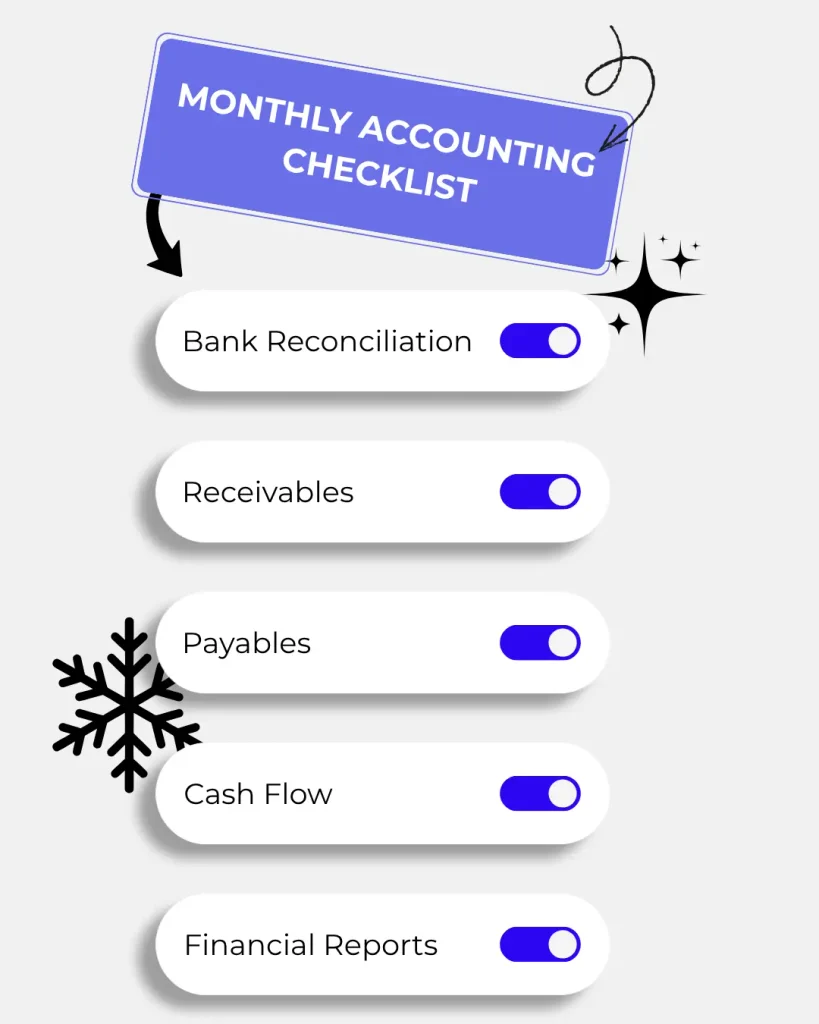
Here’s a step-by-step breakdown of what to review and update every single month.
1. Reconcile Your Bank and Credit Card Accounts
Start by comparing your bank statements with your accounting records. Every transaction should match. If there are discrepancies, figure out why it could be a missing entry, a duplicate charge, or even fraud. This is the foundation of any reliable business accounting checklist.
2. Review Accounts Receivable
Check who owes you money and how long they’ve owed it. Send reminders for overdue invoices. Staying on top of receivables keeps your cash flow healthy and prevents small delays from turning into big losses.
3. Review Accounts Payable
On the flip side, make sure you know what you owe and to whom. Pay outstanding bills on time to avoid late fees and to maintain good relationships with vendors and suppliers.
4. Track Payroll and Employee Expenses
If you have employees, confirm that payroll was processed correctly. Double-check tax withholdings, benefits, and reimbursements. Payroll errors are common but easy to avoid with a quick monthly review.
5. Review Your Income Statement
Look at your profit and loss statement for the month. Compare it to previous months to spot trends. Are expenses rising faster than revenue? Is a particular product or service driving most of your profit? These insights help you plan ahead.
6. Check Your Balance Sheet
Your balance sheet shows what you own, what you owe, and what’s left over. Reviewing it monthly helps you understand your business’s overall financial health, not just its monthly performance.
7. Monitor Cash Flow
Cash flow is the lifeblood of any business. Even profitable companies can run into trouble if cash isn’t managed well. Review your cash flow statement to make sure you have enough on hand to cover upcoming expenses.
8. Record and Categorize Expenses
Go through all transactions and make sure they’re categorized correctly. This step is often overlooked but plays a huge role when it comes time to file taxes or apply for loans. Proper categorization is a key part of any new business accounting checklist, especially for startups still building their systems.
9. Review Inventory (If Applicable)
If your business sells physical products, check your inventory levels against your records. This helps prevent overstocking, running out of popular items, or losing track of shrinkage and waste.
10. Back Up Financial Records
Make sure your financial data is backed up securely, whether through cloud accounting software or another reliable storage method. Losing financial records can be a nightmare, so don’t skip this step.
11. Review Budget vs. Actuals
Compare your actual spending and income against your budget for the month. This helps you see where you’re overspending or underspending, so you can adjust before small gaps become big problems.
How This Connects to Your Year-End Process
Following a consistent month end accounting checklist makes your end of year accounting checklist much easier to handle. Instead of scrambling through twelve months of receipts and reports in December, you’ll already have clean, organized records ready to go. This saves time, reduces stress, and often lowers the cost of working with your accountant during tax season.
Suggested: 5 Smart Finance Hacks for Busy Entrepreneurs
Tips to Make Monthly Accounting Easier
- Use accounting software. Tools like QuickBooks, CapiPlan, or FreshBooks automate much of the reconciliation and reporting process.
- Set a fixed date each month. Whether it’s the 1st or the last business day, consistency helps build the habit.
- Delegate when needed. If numbers aren’t your strength, consider hiring a bookkeeper or accountant to handle the details.
- Keep receipts organized. Use apps or folders to store receipts as soon as you get them, rather than piling them up.
- Review, don’t just record. Recording numbers is not enough, take a few minutes to actually understand what they’re telling you.
Final Thoughts
Staying financially organized doesn’t have to be overwhelming. With a clear monthly accounting checklist, you can stay ahead of problems, make better decisions, and walk into tax season with confidence instead of dread. Small, consistent habits today lead to a stronger, more stable business tomorrow.
Frequently Ask Questions
Why is a month end accounting checklist important for small businesses?
It helps catch errors early, keeps cash flow visible, and makes tax preparation easier by avoiding a last-minute scramble at year end.
How is a new business accounting checklist different from a regular one?
A new business accounting checklist focuses more on setting up proper systems like choosing accounting software, setting up expense categories, and establishing payroll processes before shifting into routine monthly maintenance.

0 Comments