
Finance is no longer slow or traditional. It is fast, digital, and deeply connected to technology. In 2026, businesses are facing a big shift in how money is managed, tracked, and used for decision-making.
The latest finance trends show that companies can no longer depend on old systems and delayed reports. Instead, they need real-time data, automation, and smart financial tools to stay competitive.
From AI-powered systems to changing global markets, everything is evolving quickly. Businesses that follow the current finance trends are gaining better control over cash flow, reducing risks, and making faster decisions.
Let’s explore the 7 most important finance trends for 2026.
Table of Contents
Latest Finance Trends Shaping Business Growth in 2026
The latest finance trends in 2026 are reshaping how businesses plan, manage, and grow their finances in a fast-changing digital world.
1. AI-Driven Finance and Predictive Decision Making
One of the biggest digital finance trends in 2026 is the deep use of Artificial Intelligence in finance operations. AI is no longer just supporting tasks; it is making decisions and predictions.
Modern AI systems can:
- Predict cash flow shortages before they happen
- Analyze spending patterns in real time
- Detect fraud automatically
- Suggest cost-saving opportunities
Finance teams now rely on AI dashboards instead of manual reports. This helps leaders make faster and more accurate decisions. AI is also improving forecasting accuracy, which is very important in uncertain markets.
Why it matters:
Businesses using AI finance tools like Oracle NetSuite, SAP S/4HANA, and Microsoft Dynamics 365 Finance gain better control over money and reduce financial risk.
2. Real-Time and Continuous Financial Reporting
Another major shift in the latest finance trends is the move from monthly reporting to real-time financial insights. In 2026, businesses no longer wait 30 days to understand performance. Instead, they use live dashboards that update instantly.
Real-time finance allows companies to:
- Track expenses instantly
- Monitor cash flow continuously
- Identify financial issues early
- Make quick business decisions
This trend is often called “continuous accounting,” where financial data is always updated instead of being processed at the end of the month.
Why it matters:
Real-time visibility helps businesses react faster and avoid financial surprises.
3. Embedded Finance Is Expanding Across Industries
One of the fastest-growing new finance trends is embedded finance. This means financial services are being built directly into non-financial platforms.
For example:
- E-commerce apps offering instant credit
- Delivery platforms handling payments inside the app
- SaaS tools like CapiPlan providing built-in invoicing and billing
Businesses no longer need separate banks or financial tools for every task. Finance is becoming part of everyday software systems. This trend is changing how businesses and customers interact with money.
Why it matters:
Embedded finance improves customer experience and creates new revenue opportunities.
4. Supply Chain Finance Is Becoming Smarter and Faster
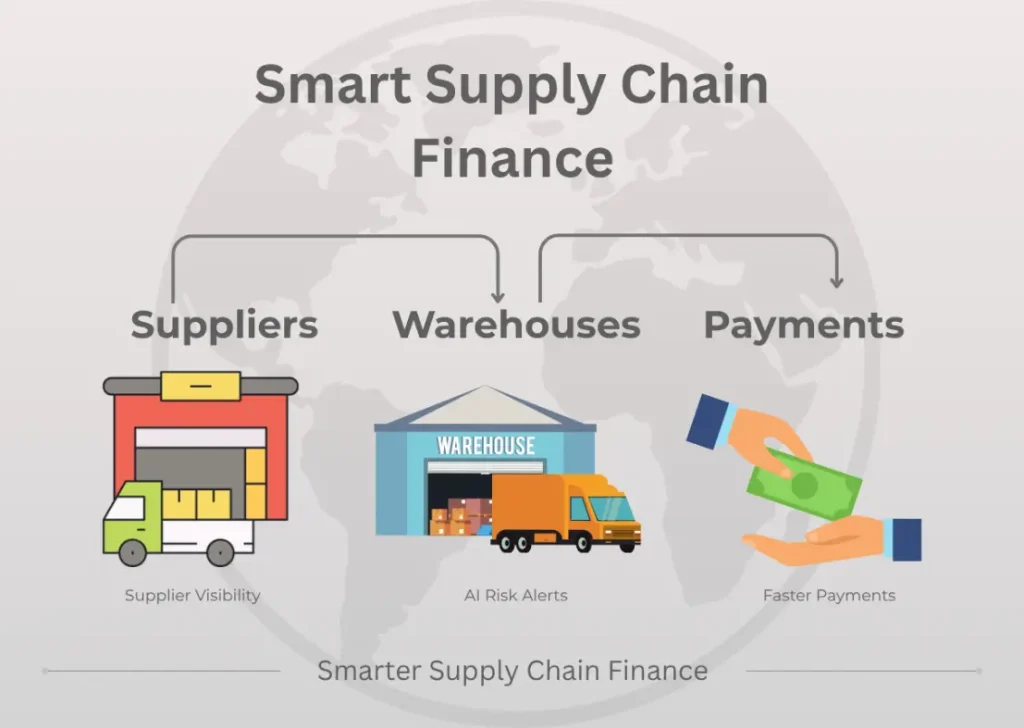
Supply chain finance trends are evolving quickly in 2026 due to global trade pressure and supplier risks. Companies are focusing on improving liquidity across the supply chain by using technology and flexible financing models.
Key developments include:
- Faster supplier payments using digital platforms
- AI-based supply chain risk prediction
- Deep-tier financing to support small suppliers
- Better visibility across global supply networks
Businesses now understand that strong supply chains depend on strong financial systems.
Why it matters:
Efficient supply chain finance improves cash flow and builds stronger supplier relationships.
5. Cybersecurity in Finance Is Now Critical
One of the most serious global finance trends in 2026 is the rise of financial cyber threats. As finance becomes fully digital, risks are increasing.
Common threats include:
- AI-generated fake invoices
- Data breaches in financial systems
- Phishing attacks targeting finance teams
- Payment fraud in digital transactions
Because of this, companies are investing heavily in cybersecurity tools and training. Finance and IT departments are now working closely together, using advanced security platforms such as CrowdStrike, Palo Alto Networks, Fortinet, and Splunk to detect threats, monitor suspicious activity, prevent fraud, and protect sensitive financial data in real time.
Why it matters:
Without strong security, digital finance systems become highly vulnerable to fraud and data loss.
6. ESG and Sustainable Finance Is Growing Strong
Sustainability is no longer optional. It is now a core part of financial decision-making in 2026. Companies are focusing on ESG (Environmental, Social, and Governance) reporting as part of their financial strategy.
This includes:
- Stating carbon emissions in financial reports
- Investing in green projects
- Transparent sustainability reporting
- Ethical investment decisions
Investors are now actively choosing companies with strong ESG performance.
Why it matters:
Sustainable finance improves brand reputation and attracts long-term investment.
7. Finance Talent Is Becoming More Tech-Focused
The final major trend in 2026 is the transformation of finance roles. Finance professionals are no longer just accountants; they are becoming data analysts and strategy experts.
Modern finance teams now need skills in:
- Data analytics
- AI and automation tools
- Financial software systems
- Strategic planning
Companies are investing heavily in training programs to upgrade skills. At the same time, many repetitive tasks are being automated, so human focus is shifting toward decision-making and strategy.
Why it matters:
Skilled finance teams help businesses grow faster and make smarter decisions.
Suggested: Top 7 AI Tools for Finance Professionals in 2026
Conclusion: The Future of Finance Is Smart and Fast
The latest finance trends in 2026 show a clear shift toward speed, technology, and smarter decision-making. AI, real-time data, and stronger supply chain systems are changing how businesses manage money.
But technology alone is not enough. Success depends on how well businesses adapt to these changes. Companies that invest in the right tools, train their teams, and stay flexible will have a strong advantage.
In the end, finance is no longer just about managing money. It is about guiding business growth. And in 2026, the businesses that understand this will move ahead faster than the rest.
Frequently Ask Questions
Why are digital finance trends important for businesses?
Digital finance trends help businesses improve speed, accuracy, and financial control through automation and real-time reporting. They reduce manual work, lower the chances of errors, and help companies make faster business decisions. Modern digital finance tools also improve cash flow management, security, and overall business efficiency.
What is the role of AI in modern finance?
AI helps businesses automate financial tasks, detect fraud, predict future cash flow, and analyze large amounts of data quickly. Many companies now use AI finance tools like Oracle NetSuite and Microsoft Dynamics 365 Finance to improve financial management and reduce risks.

0 Comments