
Managing taxes can be challenging for businesses, especially when tax rules change and financial records keep growing. In the UAE, businesses are increasingly using technology to make tax management easier. Automated tax compliance helps companies manage tax calculations, maintain accurate records and meet filing deadlines with less manual work.
Table of Contents
What Is Automated Tax Compliance?
Automated tax compliance uses technology to help businesses manage their tax responsibilities. Instead of handling every task manually, companies can use software to calculate taxes, organise financial records and prepare tax reports.
For example, a business registered for Value Added Tax (VAT) in the UAE must keep accurate records, calculate the correct VAT amounts and submit returns within the required deadlines. Automated systems can help manage these tasks more efficiently.
Automated tax compliance software like Capiplan or Avalara can connect with accounting systems, collect financial data and reduce the need to enter the same information multiple times. This makes tax management simpler and helps businesses maintain better financial records.
Why Is Automated Tax Compliance Growing in the UAE?
The UAE has developed a more structured tax environment in recent years. Businesses must understand their tax obligations, maintain proper records and follow the requirements that apply to them.
As companies grow, managing these responsibilities manually can become time-consuming. Spreadsheets, paper invoices and separate accounting records can also make it harder to identify mistakes.
Here are some reasons why automated tax compliance UAE solutions are becoming more popular.
1. Increasing Tax Responsibilities
Businesses need to understand the tax rules that apply to their activities. Depending on their circumstances, these may include VAT, corporate tax and other relevant reporting obligations.
Automated systems help businesses organise tax-related information and track important deadlines. They can also support the preparation of reports needed for tax filing.
However, businesses must still ensure that their software is configured correctly and reflects the latest applicable rules.,
2. Less Manual Work
Manual tax management often involves collecting invoices, checking transactions, calculating tax amounts and preparing reports. These tasks can take hours, particularly for businesses with many transactions.
Automated tax compliance platforms can bring financial information together and handle repetitive calculations. This allows finance teams to spend less time on routine work and more time reviewing financial performance.
3. Better Accuracy
Even a small mistake in a tax calculation or financial record can create problems during reporting. Incorrect figures may lead to inaccurate returns, additional work or potential penalties.
Automation reduces the risk of common data-entry and calculation errors. It can also flag missing information, unusual transactions and differences between records.
Although automation improves accuracy, regular reviews are still important. Incorrect data or software settings can produce incorrect results.
Key Benefits of Automated Tax Compliance Software
Businesses can gain several advantages by introducing automated tax compliance software into their financial processes.
1. Faster VAT Calculations and Reporting
VAT calculations can become complicated when a business handles different products, services and transaction types.
Automated software can calculate VAT based on configured tax rules and organise transaction details for reporting. This helps finance teams prepare VAT returns more efficiently.
Businesses should still review the figures and ensure that transactions have been classified correctly before submitting their returns.
2. Improved Record-Keeping
Keeping accurate financial records is an important part of tax compliance. Businesses may need invoices, receipts, transaction histories and supporting documents to prepare returns or respond to questions from tax authorities.
Automated tax compliance platforms can store and organise records digitally, making relevant information easier to find when needed.
Good record-keeping also helps businesses understand their income, expenses and tax liabilities.
3. Fewer Missed Deadlines
Missing a tax deadline can result in additional costs and unnecessary stress. Automated systems can provide reminders for upcoming filing dates and payment deadlines.
These reminders help finance teams plan ahead and avoid leaving tax work until the last minute.
However, businesses should confirm the applicable deadlines themselves because reminders depend on the information and settings entered into the system.
4. Lower Administrative Costs
Manual tax management often requires significant staff time. Employees may need to check spreadsheets, correct calculations and collect information from different departments.
Automation reduces some of this repetitive work. Over time, businesses may be able to manage tax processes more efficiently without increasing their administrative workload at the same rate as their transactions grow.
The actual savings depend on the size of the business, the software used and the complexity of its tax responsibilities.
5. Better Financial Visibility
Tax information is closely connected to a company’s overall financial position. When records are organised and updated regularly, business owners can understand their tax liabilities more clearly.
Automated systems can help provide timely information about VAT collected, VAT paid and other relevant financial figures.
This makes it easier to plan cash flow, prepare for upcoming payments and make informed business decisions.
Suggested: How to Stay VAT Compliant as Your Business Grows
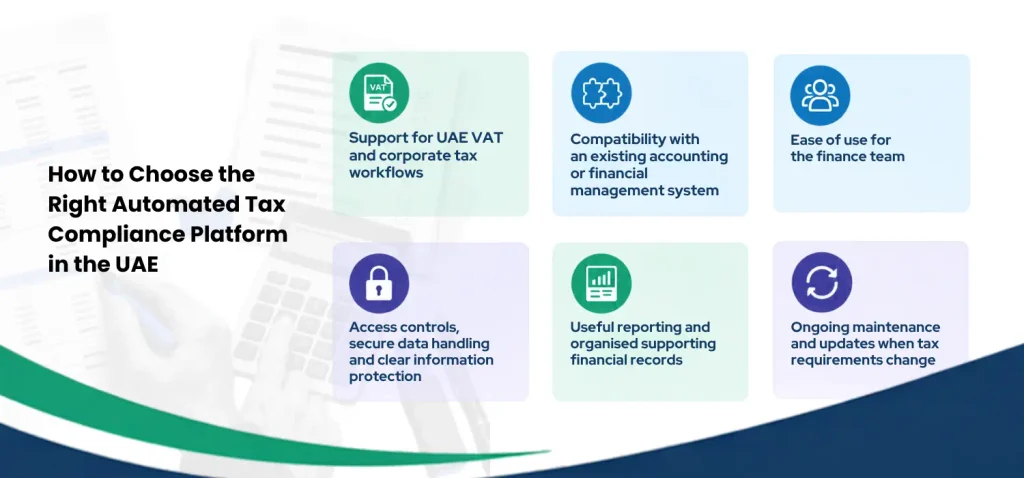
How to Choose the Right Automated Tax Compliance Platform in the UAE
Not every business needs the same software. A small business may need basic VAT calculations and filing reminders, while a larger organisation may require advanced reporting and accounting integrations.
Before choosing an automated tax compliance platform, consider the following factors.
- UAE tax requirements: Check whether the software supports the relevant UAE VAT and corporate tax workflows.
- Accounting integration: Choose a solution that works with your existing accounting or financial management system.
- Data security: Look for appropriate access controls, secure data handling and clear information protection practices.
- Reporting features: Make sure the platform can generate useful reports and organise supporting financial records.
- Ease of use: Select software that your finance team can understand and use without unnecessary complexity.
- Support and updates: Check whether the provider maintains the software and updates it when relevant tax requirements change.
It is also important to understand what the software can and cannot do. A platform may help prepare tax information without automatically submitting returns or making payments. Confirm which features are included before making a decision.
The Future of Automated Tax Compliance in the UAE
Technology is expected to play an increasingly important role in tax management. Artificial intelligence, cloud accounting and improved data integration are making it easier for businesses to organise financial information and identify potential issues.
Future automated tax compliance platforms may offer better transaction monitoring, more detailed reporting and earlier warnings about missing records or unusual figures.
As digital tax processes develop, businesses will need systems that can adapt to relevant regulatory changes. They will also need employees who understand how to review automated results and maintain accurate records.
Automation will not remove the need for professional judgement. Instead, it can give finance teams better tools to manage their responsibilities and focus on important business decisions.
Wrap Up!
Automated tax compliance is changing how businesses in the UAE manage their tax responsibilities. By reducing manual work, improving record-keeping and supporting timely reporting, the right software can make tax management simpler and more efficient. Businesses that combine reliable technology with regular checks can build a stronger approach to tax compliance.

0 Comments