
Running a business always involves some level of financial risk. No matter the size of your company, unexpected problems can affect your profits, cash flow, and business growth. The good news is that many financial risks can be identified early before they turn into serious issues.
By understanding where risks come from and taking action in advance, businesses can protect their finances and make smarter decisions. This is why financial risk management is an important part of every successful business.
In this blog, you’ll learn what financial risk is, the common types of financial risks, how to identify them early, and how technology, including AI for financial risk management, can help businesses stay ahead.
Table of Contents
What is Financial Risk?
Financial risk is the possibility of losing money because of uncertain events or poor financial decisions. These risks can come from inside the business or from outside factors like economic changes, customer behavior, or market conditions.
Every business faces financial risk at some point. The goal is not to avoid all risks but to recognize them early and manage them properly.
For example:
- Customers pay invoices late.
- Business expenses increase unexpectedly.
- Sales suddenly decrease.
- Interest rates rise.
- Suppliers increase their prices.
If businesses identify these risks early, they have enough time to respond before major losses happen.
Why Financial Risk Management Matters
Ignoring financial risks can create serious problems over time. Small issues often become much larger if they are not noticed early.
Good financial risk management helps businesses:
- Protect cash flow
- Reduce unnecessary losses
- Make better business decisions
- Plan future investments confidently
- Improve financial stability
- Build trust with investors and lenders
Businesses that regularly monitor their finances are usually better prepared for unexpected situations.
Common Types of Financial Risk
Understanding different types of financial risk makes them easier to identify.
1. Cash Flow Risk
Cash flow problems happen when more money is leaving the business than coming in.
For example:
- Customers delay payments.
- Expenses increase faster than income.
- Sales become slower during certain months.
Without enough cash, even profitable businesses can struggle to pay bills.
2. Credit Risk
Credit risk occurs when customers or clients fail to pay what they owe.
Businesses that offer credit terms should regularly monitor unpaid invoices and customer payment history.
3. Market Risk
Market conditions constantly change.
Examples include:
- Rising inflation
- Changing customer demand
- New competitors
- Currency exchange rate changes
These factors may reduce profits or increase operating costs.
4. Operational Risk
Mistakes in daily business operations can also create financial losses.
Examples include:
- Human errors
- System failures
- Poor inventory management
- Data entry mistakes
Automating financial processes can reduce many operational risks.
5. Compliance Risk
Businesses must follow tax laws and financial regulations.
Late tax filing, incorrect financial reporting, or missing legal requirements can result in penalties and fines.
Warning Signs of Financial Risk
Financial problems rarely appear overnight. Most businesses experience warning signs first.
Watch for these indicators:
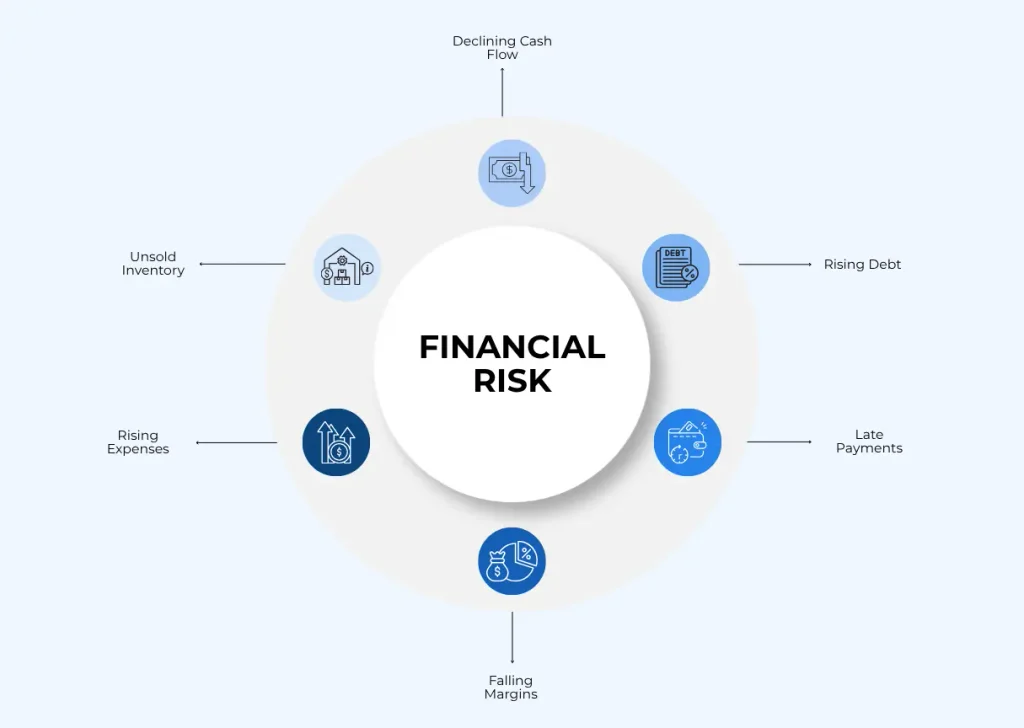
- Declining cash flow
- Increasing business debt
- Late customer payments
- Falling profit margins
- Rising operating expenses
- Inventory sitting unsold for long periods
- Frequent budgeting problems
Recognizing these warning signs early gives businesses time to make corrections.
How to Identify Financial Risks Early
Monitor Cash Flow Regularly
Cash flow is one of the clearest indicators of business health.
Review:
- Money coming in
- Money going out
- Upcoming expenses
- Outstanding invoices
Regular cash flow monitoring helps identify potential shortages before they become emergencies.
Review Financial Reports
Financial reports provide valuable insights into business performance.
Important reports include:
- Profit and Loss Statement
- Cash Flow Statement
Reviewing these reports every month helps identify unusual changes in revenue, expenses, or profits.
Perform Financial Risk Analysis
A proper financial risk analysis helps businesses understand possible threats before they affect operations.
During financial risk analysis, businesses evaluate:
- Current financial position
- Revenue trends
- Business expenses
- Customer payment patterns
- Debt levels
- Profitability
The goal is to identify weak areas and create plans to reduce potential losses.
Track Customer Payments
Late payments can seriously affect cash flow.
Monitor:
- Overdue invoices
- Customers with repeated late payments
- Average payment collection time
Following up quickly on unpaid invoices helps reduce financial risk.
Monitor Business Expenses
Expenses often increase gradually without businesses noticing.
Regularly compare:
- Monthly operating costs
- Supplier prices
- Payroll expenses
- Marketing costs
Finding unnecessary spending early helps improve profitability.
Create Financial Forecasts
Financial forecasting allows businesses to prepare for future changes.
Forecasts estimate:
- Future sales
- Expected expenses
- Cash flow
- Profitability
Forecasting helps businesses prepare for slow seasons or unexpected market changes.
How AI Helps in Financial Risk Management
Modern businesses increasingly use AI for financial risk management because it helps identify risks much faster than manual processes.
AI can:
- Analyze large amounts of financial data
- Detect unusual spending patterns
- Predict cash flow shortages
- Identify payment risks
- Improve forecasting accuracy
- Generate real-time financial reports
Instead of waiting until problems become visible, AI can detect warning signs much earlier.
Businesses using AI often make faster and more informed financial decisions.
Using Accounting Software for Financial Risk Management
Modern accounting software plays an important role in financial risk management.
Instead of relying on spreadsheets, businesses can monitor their financial health through one system.
Accounting software helps by:
- Tracking income and expenses
- Creating financial reports instantly
- Monitoring cash flow
- Managing invoices
- Tracking overdue payments
- Automating financial calculations
Having accurate financial information available at any time allows business owners to respond quickly when risks appear.
Also Read: 7 Business Accounting Tips for Bigger Gains
Best Practices to Reduce Financial Risk
Here are some simple habits that help reduce financial risk:
- Review financial reports every month.
- Build an emergency cash reserve.
- Avoid unnecessary debt.
- Track customer payments consistently.
- Prepare realistic budgets.
- Monitor business performance regularly.
- Use accounting software to automate financial tasks.
- Perform regular financial risk analysis.
- Update financial forecasts throughout the year.
- Use AI for financial risk management to identify risks earlier.
Small improvements made consistently can prevent major financial problems in the future.
Wrap Up!
Every business faces financial risk, but the businesses that succeed are the ones that identify problems before they become serious. Monitoring cash flow, reviewing financial reports, performing regular financial risk analysis, and using reliable accounting software all help reduce uncertainty.
Technology is also changing the way businesses manage risk. With AI for financial risk management, companies can detect warning signs earlier, improve forecasting, and make faster financial decisions.
For businesses looking to improve financial risk management Dubai or anywhere else, staying proactive is the key. The earlier you identify financial risks, the easier they are to manage, allowing your business to remain stable, profitable, and ready for future growth.
Frequently Ask Questions
What is financial risk analysis?
Financial risk analysis is the process of reviewing financial data to identify possible threats that could affect a business. It helps companies make informed decisions and reduce future financial problems.
How does AI help with financial risk management?
AI for financial risk management analyzes financial data, detects unusual patterns, predicts cash flow issues, improves forecasting, and provides real-time insights that help businesses identify financial risks before they become serious problems.

0 Comments